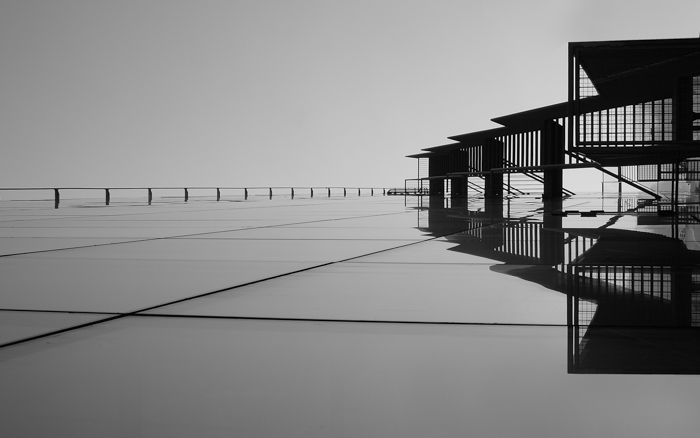
Horizontal lines in photography exist in everything we see. Even photos with no straight lines in them are bound by the horizontal or vertical frame containing them.
But there are certain ways of using horizontal lines that work and some ways that don’t. Understanding the effect that a horizontal line has on a photo can help you use it more effectively. Continue reading for everything you need to know about horizontal lines in photography.
Horizontal Lines in Photography
Using horizontal lines is a great way to group different elements together in a photo. It also helps establish details within a photograph, such as direction and location.
When it comes to composing a photo, horizontal lines can be quite bland and unexciting. After all, we already see them everywhere. To make these photos more interesting, try to find a way of putting these lines to good use.
Think About Your Horizon
Unbroken horizons are generally quite boring to look at.
Have a look at this first photo below—it’s dull and uninteresting. The second photo intersects the horizontal line of the water’s horizon with the foreground, making a much more interesting image. 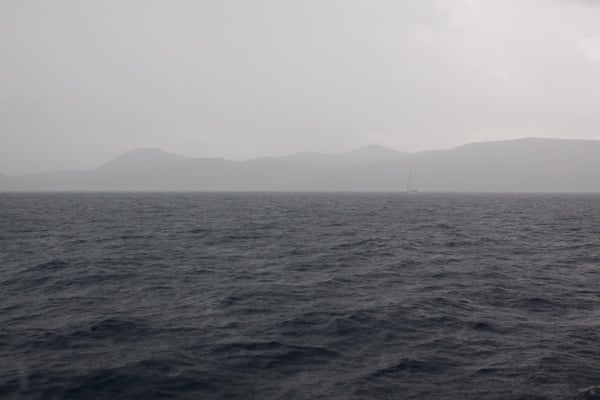

Create a Feeling of Stability
Horizontal lines give the impression of stability because of their relation to the horizon and the ground that we stand on. When you combine that with a material known for its strength, you can produce a photo that really stands out for its stability. The photo below is a good example of this.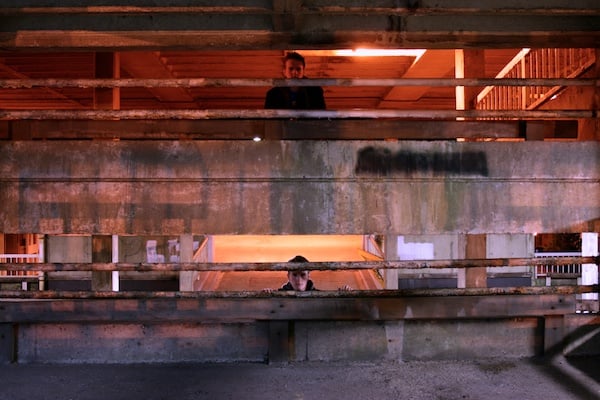
Get the Right Perspective
If you take a photo of just one flower, you’ll struggle to see any horizontal lines in it. But when you take multiple objects and layer them in lines one after another, you’ll start to see an effect similar to the one below.
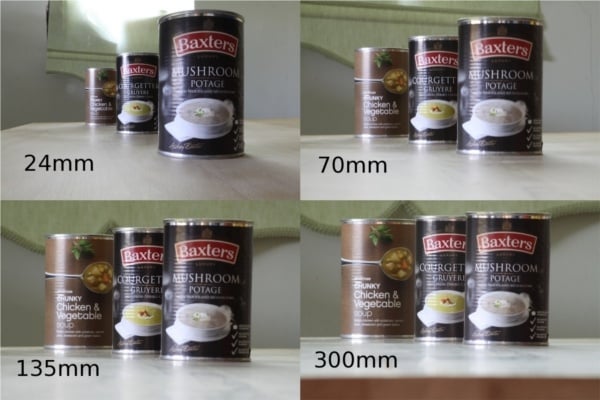
The perspective is the most important part of this photo. If it weren’t for the height above the crops, you wouldn’t see the lines in the same way. The further away the flowers get from the camera, the straighter the lines seem to appear because the perspective is flattened.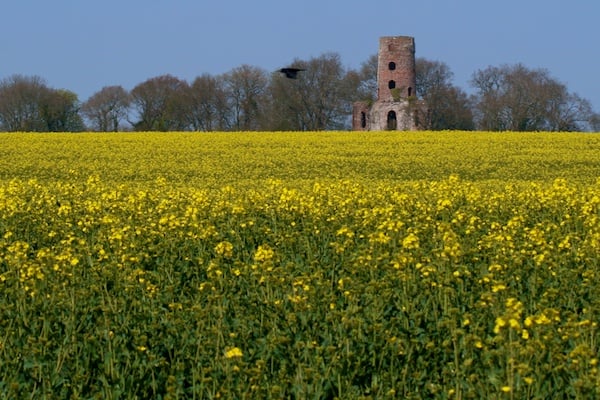 To understand how this works, you must know how focal length affects your photo. But here’s a photo I used that best demonstrates my point.
Below that is another image of a group of buildings taken from very far away. You can see lines that would have gone off in different angles in reality, which appear straight in the photo.
 Change Your Viewpoint
Viewpoint is similar to perspective in that it is related to the angle of view. But when I talk about viewpoint, I’m talking about how we look at straight lines. I’m not suggesting taking something that isn’t in line and making it appear as though it is.
Change Your Viewpoint
Viewpoint is similar to perspective in that it is related to the angle of view. But when I talk about viewpoint, I’m talking about how we look at straight lines. I’m not suggesting taking something that isn’t in line and making it appear as though it is.
Height is a very big factor in making this work as it shows you lines where you wouldn’t have otherwise seen them.
In a built-up city like Washington, D.C. (where I took the photo below), you would struggle to find a straight line of a horizon. But when you get a height advantage, a very clear horizon appears. This also presents additional lines from the roads and paths within the photo.
Photos with horizons present a strong sense of location.
Use Contrast to Your Advantage
Even the slightest bit of contrast in a photo will produce lines, as demonstrated by the photo below. The ripples in the water moving away from the boat cast slight shadows on one side, producing multiple horizontal lines on the water.
Contrast (such as light and dark, big and small, bright and dull) has the greatest effect when placed in the foreground of the image as that’s where it will appear the largest.
Photos with lots of contrast present a strong sense of direction and movement.
Conclusion—How to Use Horizontal Lines in Photography
Knowing how to best incorporate horizontal lines in photography will only help your photos. Even though they’re everywhere, you can still turn them from something mundane to something that adds to your composition.