For many, photography is a hobby. But some want to take their hobby to a whole new level. They want to earn money and become a photographer. They want to be their own boss as a professional.
Starting a photography business isn’t easy. And it won’t happen overnight. You have to be realistic and work hard. But if you want it, a photography career can be life-changing.
If you’re ready to start your career as a professional photographer, we are here to help. That’s why we’ve gathered our 10 best tips on how to become a paid photographer.
12 Professional Tips on How to Become A Photographer
Going pro may seem like a big jump. And becoming a professional photographer can be daunting. So many people have their own cameras now. Is there still a need for professional photographers?
While it may seem daunting, it is possible to pursue a photography career. Not only is there a high demand for professional photographers. But you can also earn a handsome salary in photography.
Going from amateur to professional photographer can be a difficult road. And it might look impossible from the start. But we’re here to help you on your journey. Here are our top suggestions.
1. You Need to Master the Basics
Learning the basics doesn’t mean learning how to take a nice picture of the garden on your mirrorless camera or DSLR. To become a professional photographer, you need to be more comprehensive.
You need to know how to get the most out of your camera. You need to understand exposure, depth of field, and light. The fundamentals of photography should be second nature to you.
You could arrive at your first professional shoot, and the conditions may not be what you expected. It won’t look professional if you look through your camera manual or research something on set.
Perhaps you have a college diploma or university degree in photography. Or maybe this is something you’d like to do. It can be a handy advantage. But it’s not essential to become a photographer.
The internet has become a valuable resource when it comes to photography. A quick search can provide you with information and tutorials.
Whether it’s something basic or more advanced, you can find it. And ExpertPhotography is a great place to start.
We have a wide selection of photography courses, like our Photography for Beginners e-book. It will help you hone your skills. Or you can search the ExpertPhotography database for what you need.
Learn and practice as much as you can. Pick up your camera and try to challenge yourself. Try each technique and master it.
If you have a lot of experience already, that’s great. But if not, give yourself plenty of time. Before thinking about becoming a professional photographer, you need to become a competent one.
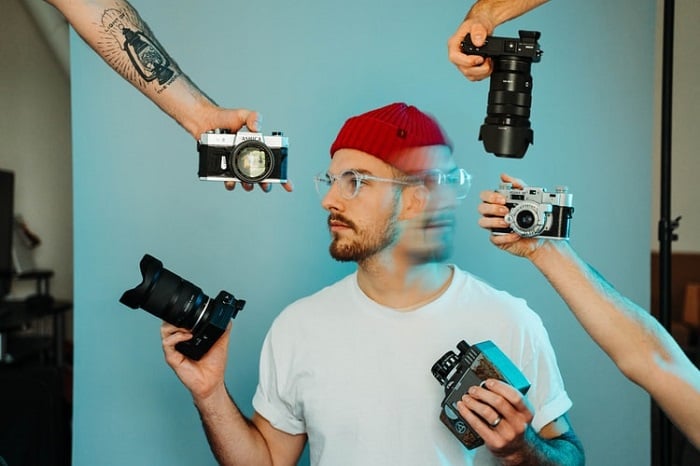
Photo by Ben Eaton
2. Reach Out to Photographers for Advice
Having your own photography business often means working alone. You are your own boss and unlikely to have colleagues around. You can’t swivel your chair and ask someone for advice.
That’s why getting advice from photographers who have already been through the process is important. Photographers that have gone pro can be invaluable sources of information.
Their insight and experience will be handy for you on your journey to becoming a professional photographer! Taking photography courses in college can be an advantage in this regard.
They can provide access to photographers that have been through the experience of going professional. Sometimes they are the tutors. Or perhaps they participate in student access programs.
But that doesn’t mean you must attend university to become a photographer. Your friends are the best place to start. Maybe you have a friend that is a photographer. Or they have a friend that is one.
If not, you can research photographers in your area and get in touch. Try and arrange a coffee with them. Or request to join them on a shoot.
Just be considerate of their time. And be careful not to be demanding or burden their work.
Professional photographers are a gold mine of information. Many will be more than happy to help. And tapping into their wealth of experience should be a priority.

Photo by Cody Lannom
3. Target a Niche to Make Yourself Unique
You can choose from many types of photography and career paths. But it can be confusing. That’s why narrowing down your options and finding the niche that suits you is important.
First, think about the kind of photography you enjoy. Then use this as your basis for practice. And give yourself the freedom to try out different photography skills. Be experimental and discover your niche.
But you also have to be pragmatic. You need to think about the types of photography that provide an income. Market research is essential to see where the demands are.
Selecting a niche is important as it gives you direction and focus. But you still need to be flexible.
For example, if you’re a portrait photographer, there may not be enough work doing headshots for actors. But you can supplement your income by working in wedding photography.
There are practical considerations too. Where you live may influence the direction you take.
Nature and wildlife photography won’t be the best option if you live in a city. And do you like working with children? If not, child portraiture likely isn’t the best gig for you.
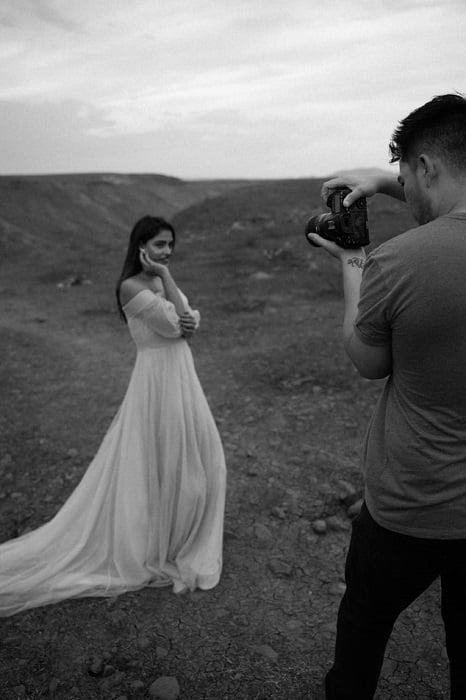
Photo by Harrison Hargrave
4. Carefully Invest in Equipment Based on Your Niche
Photography is big business, and there is so much gear to choose from. Nikon or Canon? DSLR or Mirrorless? Crop sensor or full frame? The options can make your head spin.
Much of it comes down to personal preference. But now that you’re becoming a professional photographer, you must consider what you need. It’s not about what you want.
Finding your niche will point you in the right direction. This will help you focus on the equipment that will help you in that area of photography.
For example, product photography needs specific , , lights, and equipment. And real estate photographers need the right lens for the job.
You don’t have to put yourself in debt and buy a top-of-the-range professional camera. Your budget will increase as your business grows. But you will need to invest in getting the right gear.
Gear doesn’t just refer to your camera. You’ll need a good laptop or and the right editing software. Post-processing is just as important as the work you do with the camera.
It can seem like a big expense. But remember, this is an investment. Photography is your business. And you need to spend money to make money.
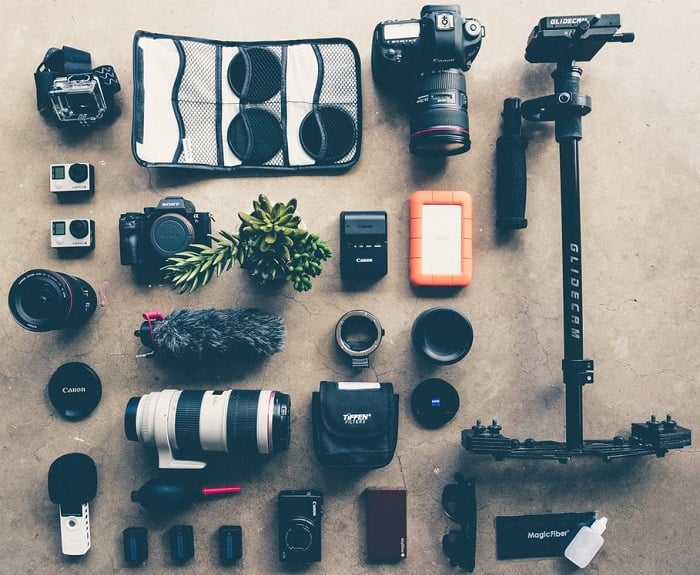
Photo by Jacob Owens
5. Learn to Edit Photos Properly
With digital photography, knowing how to edit a photo is just as important as knowing how to take one. Your editing skills have to be top-notch if your clients are expecting high-quality work.
You now have plenty of options when it comes to photo editing software. It’s a matter of finding a program that works for you, helping you define your style and deliver professional results.
Adobe Lightroom remains the leading software among photographers. Programs like Luminar Neo and Capture One are both catching up in terms of popularity and editing tools.
With most commercial photography genres, the key to good editing is to have final photos that don’t look like they’ve been heavily edited.
Producing images like this actually involves a lot of editing, but you need a feather-light touch. Heavy-handed editing will result in unsatisfactory images.
Hone your editing skills on your personal work first. Don’t experiment or take unnecessary risks on images clients are paying for. Develop an editing style and stick to it.
Editing on Luminar Neo
6. Develop a Signature Photography Style
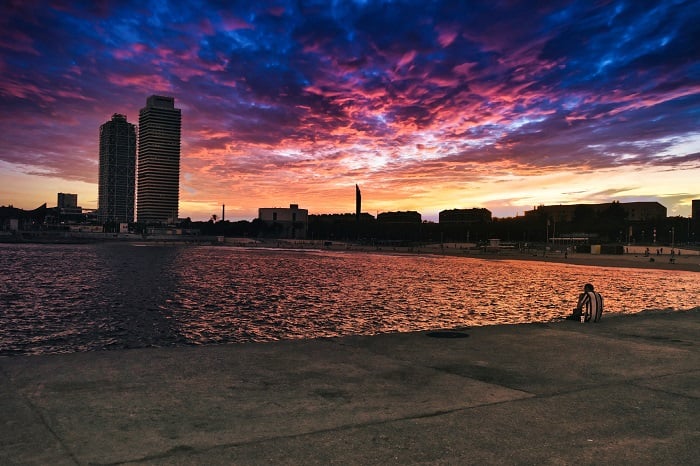
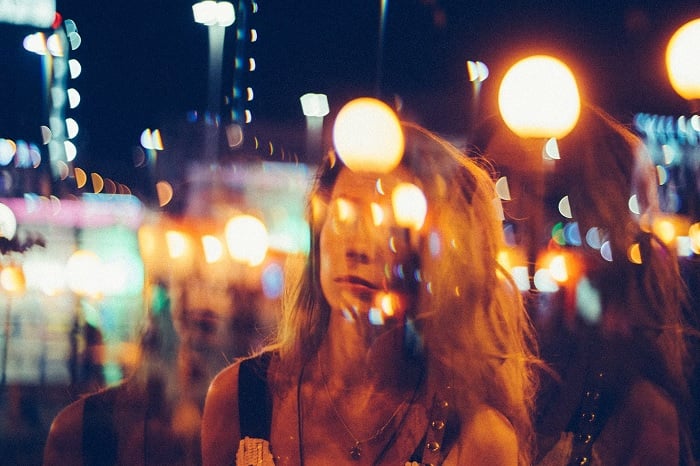
When you first start out as a photographer, you might think the best approach is to accommodate any potential client with a variable, non-distinct style. But the opposite is true. It’s better to have a clear photographer style.
The style doesn’t have to be crazy or overtly attention-grabbing. But it should be recognizable and consistent.
When people see your work, you want them to know the photos are yours. This improves your identity as a photographer, boosting your brand recognition.
You have to accept that your style won’t be for everyone. Some prospective clients might not like it and opt for another photographer.
But the people who do like your style will be more enthusiastic and willing to pay more. They are also more likely to book you again and again.
Developing a distinct photography style is more beneficial in the long run.
© Pawel Szvmanski
7. Showcase Your Talent With a Professional Portfolio
A professional portfolio isn’t a collection of your favorite shots. It’s your body of work. Your portfolio needs to demonstrate your abilities as a professional photographer.
Your niche will determine the content of your portfolio. You should highlight your skills in the area of photography you want to pursue.
You might have a group of photos you’re proud of. But if they are unrelated to your niche, you must remove them. Include some variety, but stay focused.
Even if you don’t have any paying gigs, practice as much as possible. And add your best practice shots to your portfolio.
You can build a studio at home and practice with friends and family. Or you can build an infinity curve for product photography.
Your portfolio is your shop window. Be creative, but go too off-script. It’s about showing potential employers what you have to offer.
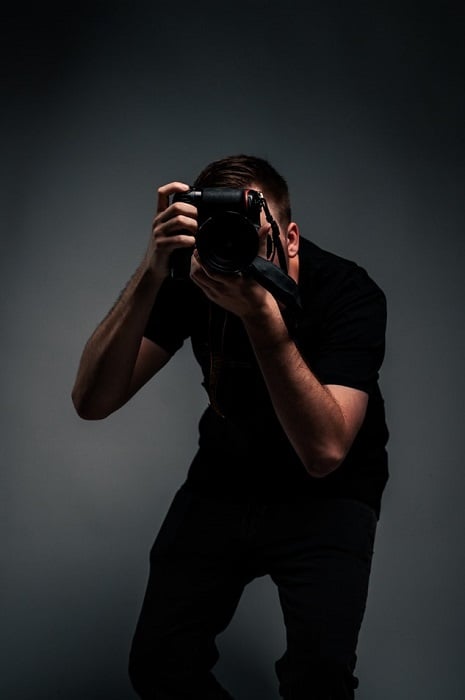
Photo by Colin Lloyd
8. Share Your Work Online to Establish Your Brand
Having a strong portfolio on hand is important. But you also need to expand your photography brand. For modern professional photographers, building your online profile is a business essential.
One place to start is with your website. And you don’t need to be a web designer to have your own site nowadays.
A company like Squarespace has plenty of templates you can choose from. They vary in price, but they are all of a professional standard.
Start with social media if your budget can’t stretch to that yet. Instagram is a great place to display your work and get some exposure. There’s lots of inspiration there too.
It’s not all selfies and mimosas these days. Many photographers use it as a professional platform for promoting their work. And using hashtags is a great way to get more views and followers.
Tumblr is another social media platform for sharing creative work. And LinkedIn is excellent for getting connected within the professional photography community.
When it comes to social media, you need to remember that it’s a professional account. So keep things serious and think about the direction of your business. Don’t post anything you might regret.

Photo by Avel Chuklanov
9. Get Organized and Behave Professionally to Succeed
The idea of becoming a professional photographer can seem glamorous. But it’s not all about stunning locations and beautiful photography.
There’s a lot of work behind the scenes too. It might be boring, but it’s just as important.
Some professional photographers do have contract jobs, where they have fixed hours and income. But the majority of photographers are self-employed and freelance.
But registering as self-employed can be complicated. So do your research.
Invoicing is another essential part of freelance life. Learn how to create one before sending one to a paying client. There are free templates online, but make sure they look professional.
Being a bit disorganized isn’t much of a problem when photography is a hobby. But you need to get organized if you want a reputable photography business.
Create special files, label everything, and always back up your work. Find a space for administrative work at home or in a shared office. But ensure it’s uncluttered and free of distractions.
Finally, even if a gig is low-pay or unexciting, you should still treat it respectfully. Be prepared and arrive early. Acting like a professional no matter what you do builds trust and a solid reputation.
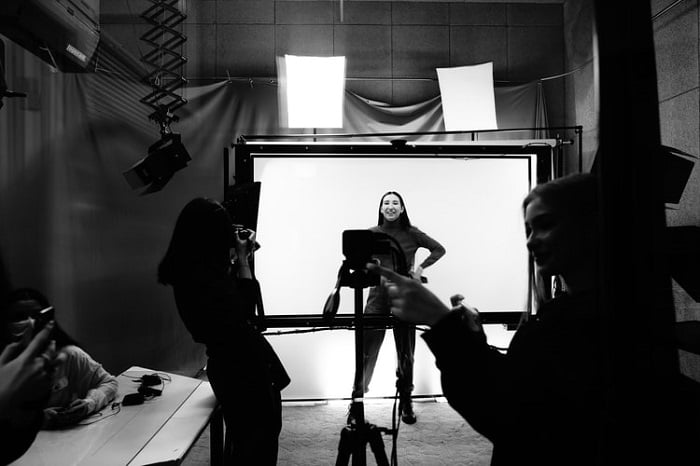
Photo by Maxim Tolchinskiy
10. Be Proactive in Finding Work and Clients
You might have an excellent portfolio. Maybe you’re getting new Instagram followers every day. And perhaps your home office is nicely organized. But that doesn’t mean the phone will start ringing.
As a freelance photographer, you must understand that the work won’t always come to you. This is especially when you’re new to the business. You must be proactive and go out and find paying gigs.
After you do get a few jobs, your reputation will grow—as will your portfolio. This will snowball, with one paid job leading to more. But this might take time, so always lookout for more work.
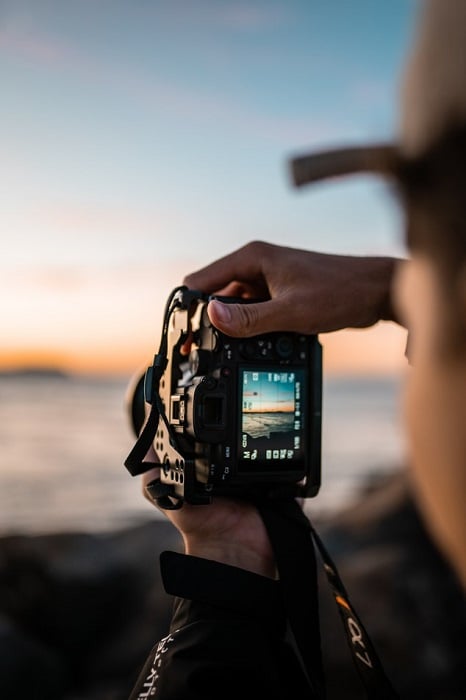
Photo by Bailey Mahon
11. Seek Out Opportunities in Your Local Area
We all dream big when it comes to our careers. Aspirations drive and inspire us. But you also have to be realistic. Let’s look at fashion photography, for instance.
You probably won’t get a reply if you email Vogue asking if they need a photographer! With no experience and a limited portfolio, there’s no point going straight to the top.
But there could be plenty of opportunities near you. For example, vintage stores or small-scale designers need commercial photography to sell their wares.
You only need to contact them, showcase your skills, and offer your services. And this is just looking at the fashion industry.
Restaurants and bakeries need good food photography. Local artisans need product photography for their online stores. And estate agents know the value of professional real estate photography.
It’s all about getting yourself out there. Be proactive in your local area.
Your reputation will grow, and you’ll develop a base for your photography business. While it may not be Time magazine, your local paper is a great place to start!

Photo by Mattias Diesel
12. Always Ask for Compensation for Your Services
You should never work for free. Volunteering for professional experience might be good when you’re starting. But when it comes to your photography business, you’ll need to change your mindset.
Be confident about your work, and don’t give it away for free. If photography is going to be your livelihood, it needs to pay.
This may sound extreme. But the payment may not always be financial when starting with local jobs. You can’t always charge top-end prices, especially if you’re working for a small business or charity.
But there are other things you can ask for that are as important as payment. For example, you can ensure your client shares a link to your website and credits you for your photos.
Having this attitude will set a standard. Potential clients will know that they can’t take advantage of you. And if you know you’re getting compensated, you won’t let your quality slip.
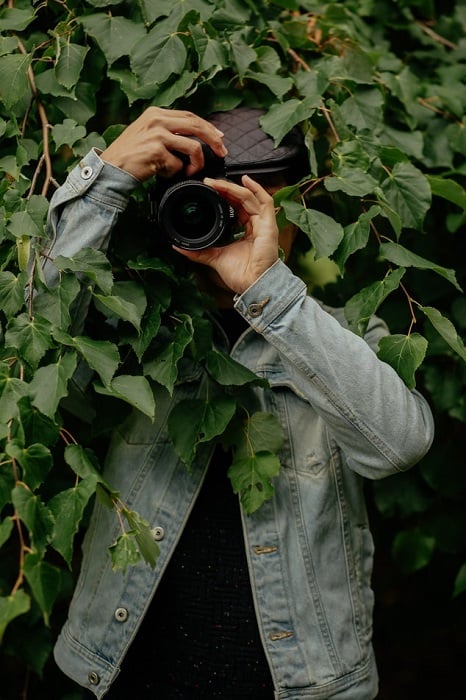
Photo by Tom Pumford
Conclusion: How to Become A Photographer
Many people are making a career out of photography right now. There’s no reason you can’t do it too.
Going professional is not a decision that should be taken lightly. It won’t always be easy. And sometimes, you might not know where your next paycheque comes from.
Don’t dive straight in.
Master the fundamentals of photography first. Do your research before you quit your day job. And start acting like a professional photographer, even if you haven’t been paid yet.
Also, be realistic and pragmatic. Don’t shoot for the stars straight away. Treat every photography job with respect. Give yourself a clear career trajectory. And work hard to achieve your goals.
We hope our practical tips on becoming a professional photographer have enlightened you. Finally, we wish you the best of luck on your photography journey!