Tag Archives: Shallow depth of field

How & When to Use Aperture Priority Mode

It dawned on me yesterday that I’ve written about shooting modes, and I’ve written about exposure, but I’ve never written about how and when you might use certain modes. Treat this topic as if you’ve just moved from full-auto or program mode, into aperture priority, and I’ll walk you through everything you need to know.

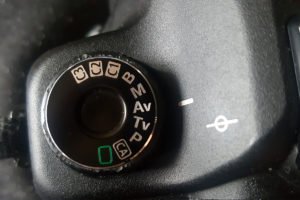
Full-auto mode allows you to change only the image format, and the burst fire mode. It will even use the pop-up flash if it thinks it needs to. Program mode is similar to a priority mode, in that you can change the likes of metering, white balance, etc., but you can’t change the shutter speed or aperture (you can change the ISO). OK, now we’ve seen the difference, lets have a look at what it can do.

When you switch to aperture priority, it does exactly what it says on the tin. The exposure gives priority over the aperture setting, and then shutter speed adjusts accordingly. Lets say that if you set the aperture to f/8, and the shutter speed is 1/200 of a second, and you decided to widen the aperture to f/5.6 (which allows twice the amount of light in), the camera will automatically change the shutter speed to 1/400 of a second to counteract for the extra light. This is how priority modes work. 

I use aperture priority mode about a third of the time (along with shutter priority and manual for the other two thirds), and it’s good for a number of reasons, the three main of which being sharpness, depth of field and light.

  1. When you widen the aperture to a lower number, say f/2, then you allow much more light into the lens, which allows you to speed up the shutter speed.
  2. Wider apertures also mean there’s a shallower depth of field and vice versa.
  3. When you narrow the aperture to around f/8-11 this is typically when the lens will be at the sharpest.

As you can see, there would be plenty of situations where you might want to use aperture priority over shutter or even manual. But what about all those people who say you should only shoot in manual? Well, they’re wrong. At least that’s my opinion. There’s plenty of cases where you might want to choose manual, but that’s only about a third of the time for me. Lets have a look at some of the situations where you would want to use aperture priority.

First though, I feel it’s worth mentioning an advantage that aperture priority has over shutter priority when it comes to exposure. A longer exposure will always allow more light into the lens, but not necessarily at speeds which will allow you to hold the camera in your hand. When it comes to aperture, it’s to do with the hardware of the lens, so if you buy one with a wider aperture, you can keep the shutter speed at handheld speeds, while widening the aperture to allow more light in. It’s a good way to improve the performance of your camera. 

When you should use Aperture Priority Mode

Situation 1 – Good light / Sunny day

When the light is fairly constant, you could use manual mode, but chances are that you’re just creating extra work for yourself. Why make the small changes that the camera is going to make for you? If you want to change the exposure, you can do so with exposure compensation meter provided in the camera.

When the light is good, you don’t need to worry about blurring your images because the shutter speed is always going to be fast enough to capture the movement. Particularly if the light is good. There’s an old rule ‘sunny 16′, which suggests a narrow aperture for shooting in the sun, and it really works. Just another reason to shoot in aperture priority.

In good light, you’re rich with light, so you might as well use a lot of it by narrowing your aperture to produce sharper images.Portfolio Export Print 15 How & When to Use Aperture Priority Mode

Situation 2 – Portraits

When shooting portraits, whether you’re using flashes or natural light, the lighting is usually pretty good. We tend not to make things harder for ourselves than they need to be, so comfortable lighting situations mean that we can take the photos at the aperture of out choosing.

I personally like to shoot at a range of apertures when taking portraits, but f/8 is one of my favourites. I just find that my photos come out the sharpest at this aperture, which works great for portraits.Portfolio Export Print 49 How & When to Use Aperture Priority Mode

Situation 3 – Landscapes

Landscapes typically have a foreground and a background, and often a middle ground too. To see all of this in focus, you need a wider aperture, somewhere up to about f/16 works for me. There are times where I will use a tripod, and if I am then I might use manual mode, but more often than not, I’m using my camera handheld so aperture priority works fine as I’m not playing with any longer shutter speeds. This is where depth of field becomes really important.Portfolio Export Print 2 How & When to Use Aperture Priority Mode

Situation 4 – Shallow Depth of Field

Shallow depth of field is achieved by opening up your camera’s aperture, which allows more light in at the same time. It’s not a small amount more light either, it’s a lot more light. The jump from f/2.8 to f/1.4 allows four times more light in, which can easily be counteracted by the shutter speed automatically, in aperture priority mode.

When you change the DoF, chances are you will be experimenting quite a bit, so you’re just giving yourself more work if you’re using manual mode. It’s not all about manual mode.Portfolio Export Print 47 How & When to Use Aperture Priority Mode

When you Wouldn’t Use Aperture Priority (But think you might)

Situation 1 – Poor light / Darkened room

As I mentioned before, the beauty of a wider aperture is that it allows your camera to see more light, and this is especially true in a darkened room. But that doesn’t mean you should select aperture priority mode. I find it best to use shutter speed priority. Let me explain…

When you’re in low light, the two main worries are about exposure (not getting enough light) and camera shake (blurry pictures). If you set the camera to aperture priority then you’re only really dealing with half of the problem, which is light. When you’re in shutter speed priority, you can account for the camera shake (say, 1/30 or 1/50 of a second) and the aperture will adjust around the speed to produce the exposure. 

Even if there’s not enough light, the aperture will automatically go to it’s widest, and you can play with the photo in post production. At least that way you don’t have a blurred photo, which you can’t fix (yet).

Situation 2 – Night Landscapes

I know I mentioned above that I like to shoot landscapes in aperture priority mode, and this is true, but not when I’m shooting at night. Night photography is a different game, reserved for the likes of manual mode. The lighting becomes so unpredictable, you have to make calculations and estimations in your head, it’s really more a case of trial and error.Portfolio Export Print 8 How & When to Use Aperture Priority ModeHow When to Use Aperture Priority Mode How & When to Use Aperture Priority Mode

The 50mm f/1.8 Lens Review & Guide

Important Introduction

When it comes down to quality for price, bang for buck, a 50mm 1.8 is one of the best lenses on the market, and an upgrade that I recommend to every new SLR user. For a very small investment of $105 for the Canon EF 50mm f/1.8 The 50mm f/1.8 Lens Review & Guide or slightly more for Nikon, you can have one of the best upgrades that you can make to your camera.

The Right lens for your Camera

If you’re a Canon user, you have only one real choice, and that’s the Canon 50mm f/1.8 which I linked to above, but if you’re a Nikon user, it’s a little bit more complicated. You actually have 3 choices, depending on which camera you have. If you’re not using a Nikon D40, D40X, D60, D3000, D3100, D5000, and D5100, then your camera body will have an autofocus motor and you can buy the Nikon 50mm f/1.8D AF The 50mm f/1.8 Lens Review & Guide for $125.

If you have one of the cameras mentioned, then your camera body doesn’t have an autofocus motor built in, which means that you have to buy a lens that does – marked with an ‘AF-S’. Unfortunately for you, this is more expensive at $219 – Nikon 50mm f/1.8G AF-S The 50mm f/1.8 Lens Review & Guide. Now, regardless of whether you have an autofocus motor or not, you can both buy the 35mm f/1.8 for $199, which will provide a better viewing angle on a crop sensor, for which you’ll likely be shooting on – Nikon 35mm f/1.8G AF-S The 50mm f/1.8 Lens Review & Guide.4 200 800 The 50mm f/1.8 Lens Review & Guide

General Review

There are advantage of buying more expensive lenses, such as the Nikon ones listed above, as they have a better build quality. I used to regularly use my 50mm before I upgraded, and all that use does take its toll on the plastic build (glass inside) and toy-like features. The lenses are very light, small and are ideal if you’re looking to upgrade from your kit lens, but don’t want to carry around a load of extra weight. It’s true that you get what you pay for, but for a couple hundred bucks, you can produce some astounding results from these lenses. When you use a prime lens, which doesn’t zoom, the optics are usually much better quality as they’re not making as many compromises and the price comes down at the same time, so that’s why I endorse them so much.

Having used both the Canon and the Nikon, I can tell you that the focus does tend to suck on the lenses, as they’re slow and inconsistant. The small focus ring on each lens doesn’t do much to help with manual focus either, and the focus can tend to be quite loud, so watch out for that if you shoot video regularly. That being said, I’m looking back on these lenses now, after using much more expensive lenses, so my judgement has changed somewhat; you may not notice the difference so much if you’re using cheaper lenses to begin with.5 6 250 The 50mm f/1.8 Lens Review & Guide

Because of the crop factor on these lenses, the Canon feels more like a 80mm lens, the Nikon 50mm, is more like a 75mm lens, and the Nikon 35 looks like a 52.50mm lens. If you do choose a 50mm lens and you’re shooting on a crop sensor, then expect it to be quite far zoomed, although this isn’t necessarily a bad thing. They make ideal cheap portrait lenses in terms of focal length, but expect to have to walk backwards if someone asks for a group shot.

If you’ve been reading this blog for a while, then you should know all there is to know about how perspective changes at different focal lengths, but as I mentioned in my post on the crop factor, putting your full frame lens on a crop sensor body will not change the perspective – only crop it. This is a good thing because the way we see through our own eyes is generally considered to be similar to about 45mm, so by using a 50mm you’re quite accurately representing our natural view, and not compressing the perspective too much.

There are obvious downsides to cheaper lenses, but don’t be put off, because when you put a 50mm f/1.8 on your camera, you’re not going to want to take it off – I know I didn’t. It’s a tool for every photographers arsenal, and I personally don’t know anyone who has regretted the purchase. Enough of all this talk about why it’s so great, let me show you.1 8 320 400 The 50mm f/1.8 Lens Review & Guide

The Lens Guide

The very first thing you’ll notice about your new lens, is the ability to shoot in much lower light, without having to use the flash. This is because of the wider aperture, which allows more light in. If you don’t know your aperture scale, then I suggest you learn it, but for now, let me tell you that if your lens went as wide as f/3.5 before, it now lets in four times as much light, at f.1.8. When I say wide, I’m talking about the size of the hole in the lens that the light passes through. The photo below, was taken indoors in a dark room at f/1.8 for 1.200 of a second at ISO 100.1 8 200 The 50mm f/1.8 Lens Review & Guide

The next thing you’ll notice is that the depth of field (DoF), can go remarkably shallow, and that’s because of the way the light passes through the lens at a wider aperture. The wider the aperture, the shallower the depth of field. This can be used for great creative effect, and it works really well, but a common problem with a lot of people who get a 1.8, is that they think it looks so good, it’s all they ever use, so use it sparingly or it’ll lose its appeal. Notice from the photo below that the glasses on the face are in focus, but the end of the hat, and chin, are out of focus. This was also shot at f/1.8.1 8 60 500 The 50mm f/1.8 Lens Review & Guide

From the photo above, you may notice the circular shapes of colour in the background, and this is what’s referred to as Bokeh. Simply put, it’s the aesthetic quality of out-of-focus areas of a photograph. It relates to how nice the background blur looks when out-of-focus. When you’re shooting at wider apertures, the effect of the bokeh is accentuated, so it will look at lot more prominant than anything you would have seen with your kit lens. Because this is a cheap lens, made to a price, it’s not the highest quality (which you may see from the photo above), but when you use it properly, with distant light, you can produce some really nice effect. Again, the photo below was shot at f/1.8.1 8 250 The 50mm f/1.8 Lens Review & Guide

Selective focus with a f/1.8 is something that you may not have done too much of in the past. Because the depth of field can be made to look so shallow, it’s even more effective with this lens, and you can focus the viewers attention onto a certain part of the photo, while making them want to explore the rest at the same time. It’s a powerful technique, but like everything, remember not to overdo it.2 400 The 50mm f/1.8 Lens Review & Guide

When you’re shooting wide open, you’re going to produce some very soft photos, so if you want them to be sharper, you need to narrow your aperture a fair bit. I find around f/8 to be the sharpest point on my Canon 50mm f/1.8. The photo below was shot at f/7.1, and manages to keep the whole of the subject in focus, while making sure plenty of detail remained in the background, so that you could make out the burnt down pier. Experiment with wide apertures at first, but you may find that narrower ones suit your style a lot better.7 1 640 The 50mm f/1.8 Lens Review & Guide

As I mentioned earlier, the crop factor does make this lens appear more zoomed than you may want it to be, but that can’t really be helped, unless you opt for the 35mm – it’s really a matter of personal preference and budget. It’s all about working with the gear that you’ve got at your disposal. When I took the photo below, I had no tripod on me, and just my 50mm lens. Because I knew what effect this would have on my photos, I chose to find a position that would work for me, rather than to simple give up, as I would have typically shot this photo with a wider angle. I found a position on a dock further away, and shot this photo at f/4.5 for 8 seconds and I was very happy with how it came out.4 5 8s The 50mm f/1.8 Lens Review & Guide

I’ve spoken a lot about f/1.8, but the lens aperture will go as narrow as f/22, which is fairly common. This will give you a much deeper DoF so that you can have your background and foreground in focus. The photo below was shot at f/22 for 4 seconds, and as you can see, the deep foreground is in good focus, and you can still work out all the minor details in the background on the pier. It’s important to remember that the lens does have more uses than just low light photography or shallow depth of field.22 4s The 50mm f/1.8 Lens Review & Guide

Finally, as you start to collect more gear, you can use that to make your photos look even better. A 50mm lens is great, but when you use it in conjunction with an external flash unit (and off camera transmitter for the photo below), you’ll get even better results. Like I said before, it’s about working with what you’ve got, and when you’ve got a little bit more, it can become a lot easier (when you know what you’re doing) to get better shots.11 160 The 50mm f/1.8 Lens Review & GuideThe 50mm f1 8 Lens Review and Guide The 50mm f/1.8 Lens Review & Guide

20 Tips for Shooting With a Shallow Depth of Field

What’s It All About?

Shooting with the aperture wide open is a really good way of taking soft, naturally lit photos, as the aperture produces a shallow depth of field, and allow the maximum amount of light in. It’s also a great way of drawing the viewers eye to a certain part of the photo, as the majority of the photo will be out of focus. The photos in this post were shot on 3 different lenses; a 24-70 f/2.8, a 35mm f/1.4 and a 50mm f/1.8, and even though the maximum aperture varies, they were still shot at their maximum. The reason for this is because the bokeh of the photo is much better, and for those that don’t understand what that means, I sugest you read that article, but for the purpose of this post; it’s the aesthetic quality of out-of-focus areas of a photograph. It relates to how nice the background blur looks when out-of-focus.

Even though the numbers 1.4 and 2.8 are really close together, 1.4 actually allows 4 times more light into the lens then 2.8. If you’ve read my post on aperture, you’ll understand what this means, but here’s a quick explanation of how it works. f/1.4 is 2 stops wider then f/2.8: f/1.4, f/2, f/2.8… And for every f-stop, the lens allows half the amount of light in, so f/2 allows half the light of f/1.4 and f/2.8 allows half the light of that. Because these photos were shot with the aperture wide open, the allow a lot more light and create much softer photos.

Tips and Photos

The wider your aperture, the wider the bokeh will be, and anything other then wide open will cause the bokeh to be the shape of the aperture rings (usually pentagon or octagon

9 1 11 20 Tips for Shooting With a Shallow Depth of FieldIt’s a great way to produce soft backgrounds like this photo below shot at f/2.8.2011 01 19 at 15 57 52 20 Tips for Shooting With a Shallow Depth of FieldWhen you’re shooting indoors, there’s a lot less available light so bouncing flash off a wall and shooting with a wide aperture, creates just the right amount of light to create an good exposure.
Christmas Eve 1088 20 Tips for Shooting With a Shallow Depth of FieldWhen your aperture is wide open, your depth of field is really shallow and it’s hard to find a good focal point. You can either really worry about this or not worry at all. In the photo below, shot at f/1.8, the lack of focus actually makes it look better in my opinion. IMG 0872 20 Tips for Shooting With a Shallow Depth of FieldShallow DoF helps to draw the attention to a certain part of the body, and leaves the rest blurred.IMG 1691 20 Tips for Shooting With a Shallow Depth of FieldWhen you have mutltiple subjects in a scene, a wide aperture will only focus on 1 person, making it a great tool for selective focus in photography.
IMG 3146 2011 05 28 at 17 36 37 20 Tips for Shooting With a Shallow Depth of FieldThe photo below was shot wide open, which kept the background blurred, even though the subject wasn’t far away from it, and that makes the photos look a little eerier in my opinion. IMG 3354 20 Tips for Shooting With a Shallow Depth of FieldTo emphasise the DoF, place the subject in the scene moving away from you.
IMG 3468 20 Tips for Shooting With a Shallow Depth of FieldShot in twilight, the wide aperture allowed me capture loads of natural light in the background that I wouldn’t have captured otherwise.

The foreground may be out of focus, but that doesn’t me it doesn’t matter. Consider what’s in your foreground and how you can use it to spark some interest in your photo.

IMG 4840 2011 07 02 at 19 57 43 20 Tips for Shooting With a Shallow Depth of FieldBe very careful where you’re focusing. Rather then focusing on her nose, I focused on the light on her cheek, underneath her sunglasses because that produced the best overall focus. IMG 5063 2011 07 03 at 18 54 54 20 Tips for Shooting With a Shallow Depth of FieldNatural light if your best friend when shooting with a wide aperture. IMG 5089 2011 07 03 at 19 45 28 20 Tips for Shooting With a Shallow Depth of FieldYou can be more adventurous with placement of key features in a photo when you’re using a shallow depth of field, as the eyes will be drawn to whatever’s focused.
IMG 5117 2011 07 03 at 20 03 34 20 Tips for Shooting With a Shallow Depth of FieldA wide open aperture is important when you’re shooting into the sun as the lens flare will be the same shape of your aperture, and anything other then wide open will cause the bokeh to be the shape of the aperture rings (usually pentagon or octagon).IMG 5141 2011 07 03 at 20 24 08 20 Tips for Shooting With a Shallow Depth of FieldWide apertures are great if you want to viewer to only look at a single part of a photo.

IMG 5205 2011 07 03 at 21 24 50 20 Tips for Shooting With a Shallow Depth of FieldTop Tip! If you focus on the eyes of a your subject, the rest of the face will appear in focus too, even at f/1.4.
IMG 5336 2011 07 04 at 21 47 25 20 Tips for Shooting With a Shallow Depth of FieldWide aperture allows you to capture loads of light, which means you can turn up your shutter speed and take photos while you’re walking, of other moving subjects.IMG 6555 20 Tips for Shooting With a Shallow Depth of FieldIf there’s movement in your photo, focus on the most still part of the photo, like the lips in the photo below. IMG 8175 20 Tips for Shooting With a Shallow Depth of FieldWide apertures are particularly effective if you’re shooting through objects in your foreground as it turns them to a soft blur.
IMG 9099 20 Tips for Shooting With a Shallow Depth of FieldIf you’re going to be shooting with a wide aperture, consider what else you can put on that same focal plane and have multiplie points of interest in the photo. Not only was the camera focused on the model’s face, but the flowers she was reaching for too.
IMG 9188 20 Tips for Shooting With a Shallow Depth of Field

20 Tips for Shooting With a Shallow Depth of Field 20 Tips for Shooting With a Shallow Depth of Field

zp8497586rq

How to Understand Depth Of Field and Produce Creative Blur

Why Depth of Field is important to your Photos

Depth of Field has positive and negative effects on your photos and knowing exactly what it does, and how to control it, is essential to taking the best possible photos. This post teaches you all about how to use it to your advantage and how much DoF is right for different situations.

What is Depth of Field?

Depth of Field (DoF) is the distance between the closest objects in focus and the furthest point of focus. The distance can be increased or decreased by changing the aperture of the lens. You’ll often see shallow DoF used creatively in photos as it forces the focus onto a certain part of the photo.

How does it work?

DoF is controlled by the width of the aperture in the lens. For those of you that don’t understand aperture, I strongly suggest you go back and read this post first. The wider the aperture is, the shallower the depth of field and vice versa. Have a look at the diagram below that explains this.Comparisonof Aperture How to Understand Depth Of Field and Produce Creative Blur

To really get a strong sense of why this is, have a look at the diagram I made below. The wide aperture, which goes from the full width of the lens, takes in the light at a much wider angle; this in turn means that the light has less further to go to get out of focus. A narrow aperture, on the other hand, stays in focus much longer as the light has further to travel to get out of focus.
 How to Understand Depth Of Field and Produce Creative Blur

That’s not all that affects DoF though, there’s also the focal length and distance from subject.

Distance from Subject

The best way to demonstrate this is not with a diagram, but with your own hand. Take your arm and stretch it out in front of your face with your hand as far as you can reach. Looking at your hand you’ll notice that you can still work out a lot of detail behind it without moving your eyes away. Now, gradually move your hand closer to your face all the time focusing on it and you’ll notice that your peripheral vision will get more and more out of focus. The same effect is present when using a camera lens.

Creative uses of DoF

Shallow DoF is often used to create a point of focus on one single subject in a photo. It’s hugely effective at doing this and has become quite common with the availability of cheap wide aperture lenses. I recommend playing around with shallow DoF’s but be careful not to overdo it as your photos will start to become boring and similar. It’s an easy effect to achieve, but that means so a lot of people will be doing it. It can be very effective, but try to go further then this to put yourself above the rest.

Extremely shallow DoF shot at f/1.4

Using an aperture this wide creates really nice, soft photos, and when shooting in the evening sun, it makes the photos look a lot warmer. Notice how the face is sharp, but the neck and shoulders are quite soft. It’s also fun to play around with the focal plane when the DoF is this shallow; in this photo I placed the flower to the right of her face so that it was also in focus. I was able to achieve this easily as I wasn’t too close to the subject, and the lens I used was only about 50mm.
IMG 9092 How to Understand Depth Of Field and Produce Creative Blur

Shallow DoF shot at f/1.8

This shot was taken in the evening as the sun was nearly gone, which is part of the reason the DoF was set so low. It’s a really good way of getting smooth, soft photos, where there is still a point of sharpness and detail. Because the focal length was effectively about 75mm and I was very close to the object, the DoF was exaggerated. IMG 3468 How to Understand Depth Of Field and Produce Creative Blur

Medium DoF shot at f/5.6

With an aperture of f/5.6, you can clearly make out the detail of the whole body, as well as some of the background. In situations like this where there is depth to the photo, it’s important to consider the aperture before taking the photo as you’ll want to keep as much of the subject in focus as possible. IMG 8605 How to Understand Depth Of Field and Produce Creative Blur

Deep DoF shot at f/22

For many ‘scene’ shots, you’re going to want to keep as much of the scene in focus as possible. This means using a narrow aperture and a deep DoF which allows the viewers eyes to make their way round the whole photo and explore it. I chose this photo as an example as you can clearly see that there’s a lot of depth to it and plenty of places for your eyes to wander.IMG 5930 How to Understand Depth Of Field and Produce Creative Blur

If you’re having any trouble understanding any of this, then I strongly sugest you read the 3 articles linked inside of this post.How to Understand Depth Of Field and Produce Creative Blur1 How to Understand Depth Of Field and Produce Creative Blur