Tag Archives: off camera flash

10 Embarrassing Mistakes I Made as an Intermediate Photographer

These are common mistakes for photographers, and I’m a big believer in learning from other people’s mistakes, rather than your own. That’s what this post is all about.

You may remember last year I wrote an article called 10 Embarrassing Mistakes I Made As An Beginner Photographer, which was all about the silly mistakes I used to make, when I knew no better. This post is an advancement to that, showing you that there’s still plenty to be learned.

I Only Used On-Camera Flash

This might seem like a bit of a weird one to start on, but it’s similar to a mistake I made as a beginner photographer. It used to be that I would never use a flash, but when I finally started using an external flash, another problem arose.

Flash that comes from the same angle as the lens has a very flattening effect on a photo, which would make my photos dull and two dimensional. When I started to take my flash off-camera, I was able to make my photos much more interesting.

Find out how to use your flash off-camera. 10 Embarrassing Mistakes I Made as an Intermediate Photographer

My Focusing Sucked

This may be airing on the side of beginner problems, but it wasn’t included in the last post, so it deserves a mention.

When you buy your first wide aperture lens, such as the 50mm f/1.8, you end up with a lot of photo where there’s a very shallow depth of field. This leads to focus problems.

Here’s a few examples for you.

  1. If you’re taking a photo of a person, always focus on their eyes. We’re drawn to a person’s eyes, so that’s where the focus needs to be.
  2. If you’re taking a photo of a group of people, focus on the person closest to you. This is where you’ll look first, so it’s important that it’s in good focus. The focus will still extend back naturally. If you’re focused on the person at the back of the photo, then you’re going to have a hard time keeping everyone in focus.
  3. When you’re shooting landscapes, focus about a third of the way into the scene. I often just use my center focus point if I’m facing down to the scene. If you focus here, with a narrow enough aperture, this is where you’ll find the greatest depth of field. Even if there’s no apparent foreground subject.

I ‘Invested’ in Cheap Photography Products

Ergh, this one still annoys me.

I was so tempted to buy a good selection of tripods, lighting modifiers, accessories, etc. that I would end up buying the cheapest available. And even though it seems good value, when the gear eventually arrived, it was never really up to scratch. In fact, it tended to break pretty quickly.

I would end up buying the same thing twice. First, the cheap version, and then second, the expensive (and good quality) version which I had put off the first time.

To stop you from making the same mistake as me, I’ve put together a selection of recommended photography gear for you to browse. This probably sounds like a sales pitch, but just trust me on this one.

I Held my Camera Poorly

You never really realise how useful holding your camera correctly can be. Especially when you need to keep still in low light.

Just by learning how to hold my camera correctly, I stopped my fingers from getting in the way of the lens, and I would feel much more secure in holding my camera. This would allow for slower shutter speeds, which can come in really useful. 10 Embarrassing Mistakes I Made as an Intermediate Photographer

My Camera’s Sensor was Dirty

You may not even realise how dirty your camera sensor is, so before you go any further, I want you to test it.

Pick up your camera, and point it at a clean, plain part of the wall. Then turn your ISO up (to allow for more exposure), and narrow your aperture. Take a photo, and because you have a narrow aperture, you will be able to spot any dust lurking around.

I recently had mine cleaned professionally, and it only cost £15 so it’s not bad. Ask other photographers to help you, don’t take it to as shop as it will take a lot longer, and cost more.

In the meantime, buy this blower to help remove sensor dust.Brighton West Pier September 2012 151 10 Embarrassing Mistakes I Made as an Intermediate Photographer

My Workflow was Useless

Here’s how I used to import my photos…

If I went to take photos on Brighton beach, the folder would be called ‘Brighton Beach’ and the file name would be ‘Brighton Beach’, followed by a number.

Not anymore.

The folder name always has a month/year after it now, so if I take a photo on the beach now, the folder is called ‘Brighton Beach 10/12′. But much more importantly than that though, is the file name. Lets have a look at what I do.

Custom Name_Date_Sequence

I also apply my own copyright information onto it too, during the import.

This way, whenever I need to search for a photo, I can find what I’m looking for, and if someone sends me a photo back, I know where it’s come from. It’s good practice for your file management.

I Waited For the Weather

This is such nonsense. It’s just an excuse to not get up and take photos.

Waiting for the weather is when you want your scene to have very specific conditions before you take a photo. And then when it comes, and you’re busy, you just think, oh well, this weather will be back in a few weeks. What nonsense.

In reality, you can’t rely on weather, and you would do much better if you learned to adapt to the weather you have. I went to take a photo of the sunset on the beach the other day, but it was cloudy, so I adapted.

In the photo below, it would have been great to have the sun glowing through the sky, but it wasn’t, so I worked with the what I had, and it looks great in black and white. Stop waiting for the weather. 10 Embarrassing Mistakes I Made as an Intermediate Photographer

Only Ever Shot From Eye-Level

I’m tall.

I’m 6 foot 3, and I tower over a lot of people when I take photos. This can have a pretty negative effect on my photos, if they’re always looking down, from the same perspective

When you can start to consider different angles that you can take photos from, you’re going to produce far superior results, because there will be a mix of perspectives.

I personally love shooting from the hip now. 10 Embarrassing Mistakes I Made as an Intermediate Photographer

I Only Shot in Manual

But Josh, professional photographers only ever shoot in manual?

Rubbish. Completely not true. Some may, but the majority don’t.

It’s great (and essential) to learn manual mode, but the truth of the matter is that I probably only use it about a third of the time. The rest of the time I’m on aperture priority mode, or shutter speed priority mode.

  • Manual is great when you want to take full control over your photos, and has loads of uses.
  • Aperture priority mode is used when you know that the most important factor is the aperture (perhaps because you want a certain DoF or sharpness), and the shutter speed isn’t so important.
  • Shutter speed priority is for when you know your shutter has to be a certain speed, such as when you’re shooting in low light, or a fast moving object.

A lot of the time when you’re shooting in manual mode, you’re doing something that a priority mode would have easily done more for you. Read more about it here and here.

I Would Reach a Creative Road Block

When you take photos often, it’s not uncommon to reach a creativity road block, where you’re mind stops coming up with new ideas, and you find the idea of taking photos quite boring.

You may even start to hate your own photos.

This is no good, it’s poison and it can start to spread.

Whenever I get stuck, you know what I do? I look at my photos. I share my photos. I enjoy my photos. That usually stops me from hating them again, because you start to see why you like them.

When I want to find inspiration, I go for a walk. Only I leave my camera at home. I’m pretty well trained by now to look for photographic potential in everything, and for some reason, that feeling is even stronger when I don’t have my camera. It’s like an itch where your missing finger should be – you notice it more.

Don’t run your inspiration into the ground, you want to make photography fun for yourself, not to suck the life out of it. If you’re looking for inspiration in particular, I find it’s great to browse Pinterest too. 10 Embarrassing Mistakes I Made as an Intermediate Photographer10 Embarrassing Mistakes I Made as an Intermediate Photographer1 10 Embarrassing Mistakes I Made as an Intermediate Photographer

3 Steps to Taking Great Party Photos

Introduction to Party Photos

We’re reaching the end of October now and with Halloween just a few days away, party season is well and truly here. A post on party photography might seem like a weird idea, but it’s not as simple as you may think; that is, if you want to get good party photos. I’m known amongst my friends for my photography at parties, because I regularly have my camera with me, and record the parts of the night that are often forgotten by morning.

Step 1 – Setting up your Camera

Assuming that your party is either in the evening or indoors, you’re going to want to set your camera to manual mode to take control of the exposure. In low light conditions, you basically have two main options; you can either widen your aperture to capture the most light, or use a flash. These produce great results, but there’s plenty to be aware of before diving straight in.

Firstly, think about your personal style, do you prefer candid photography, or posed group photos? If you like candid photography, then wide aperture is a great choice, but you need to be aware that you’re still going to have people come up to you ask for a group photo, and with a wide aperture, comes a shallow depth of field, which won’t work out so well. If you’re more into group photos, then you need to have a deeper depth of field, and to make up for the lack of light, you’ll have to use a flash. It’s no secret that pop-up flash photography looks pretty terrible and is capable of ruining a photo, so use an off camera flash if you’ve got one, or try some of the techniques which we’ll get to in a bit.2011 01 08 at 00 34 09 3 Steps to Taking Great Party Photos

Make sure that your camera mode is in manual, and then start taking some test shots because it will help you to understand what you need to get a good exposure. It helps to know how your camera responds to particular lighting, because then it’s easier to set up your camera. I know that my camera doesn’t handle the ISO very well when it gets past ISO1000, so I set my ISO to there and work with my aperture and shutter speed after that. You’ll likely find that you shoot much wider angles at parties, which is good because it makes it easier to hold the camera steady at say, 1/50 of a second. So with my ISO at 1000 and my shutter speed at 1/50, I can easily play around with my aperture, depending on the light and the lens.

Aperture is the one thing that you’ll probably struggle with at a party, purely because of the depth of field, so if you’re happy to carry around an extra lens, say a f/2.8 or f/3.5 kit lens, then that can really help you out. If you can shoot without a flash while using a wide aperture, then that’s great because the lighting will look a lot more natural, but if not, then you’ll want to use a flash. The reason I say carry an extra kit lens, because if you’ve got a 50mm or a 35mm, then you’re gonna find that you want a wider angle than that when you’re shooting at a party, and if you’re using a flash and a narrower aperture anyway, it might as well be on a zoom lens.

Step 2 – Using The Flash

As I mentioned above, regardless of your style of photography, if you’re at a party at night or indoors, then you’re going to end up using a flash to help with the lighting. I strongly recommend the purchase of an external flash unit, but if you don’t have one, then we’ll get to your options in a bit. The great thing about an off external flash unit is that you can bounce the light off the ceiling to produce a more natural light, or you can use a diffuser to as a small light box to bounce the light indoors or outdoors. You can also buy transmitters for your flash too, so you can take the flash off the camera and have it coming from a different direction, although this is probably a little advanced for most parties.

Below is a photo which was taken indoors with the flash turned slightly behind me and pointing up to the ceiling, which you can see in the reflection in the mirror. This keeps a good amount of shadows still on the face and makes it look more like no flash was used at all. This sort of style is really good for casual parties, where you’re at a friend’s house and there’s no fancy lighting. The photo was taken at ISO 400, f/3.5 at 1/100 of a second, which allowed for more light because of the confined conditions and bounce flash.2011 01 08 at 00 09 11 3 Steps to Taking Great Party Photos

If you want to go the extra mile and use an off camera flash, then you can produce some better lit photos without making the lighting too garish. I used a Speedlight Transmitter for my photo below, and moved the flash around to the side. Because it was almost dark out, I had to push my ISO to 800, while narrowing the aperture to f/2.8. Because I was using a flash though, I knew the bust of light would freeze the motion, so I wouldn’t have to worry about movement in the photo. I did however want a bit around the moving bottle, so I chose a speed of 1/60. The more you use your camera, the easier it will be to make these decisions without having to think about them.Ben Katie McGowan BBQ 310711 8362 3 Steps to Taking Great Party Photos

If you don’t have an off camera flash unit, and you want to be able to use your flash, then I would recommend trying some slow sync flash. This involves using your flash, but setting your camera to manual so that you can allow for more ambient light and creative blur. This stops the camera for focusing so much on the bright direct light from the camera, and more on the ambient light in the background. The photo below is an example of slow sync flash, with direct light, although I did take it with an external unit as I had one on me. You can choose whether you want the flash to fire at the beginning or end of the exposure, depending on what you want the photo to look like. ISO500, f/3.5 for 1 second. 3 Steps to Taking Great Party Photos

I’ve shown you photos where you can easily bounce some light without having to push your camera too hard, but what about when it’s not so easy? You just need to remember that you have to work with whatever you’ve got, so if you’ve got limited gear, then use the techniques I’ve spoken about, but I would suggest a higher ISO so you can allow for more ambient light and can turn down the flash exposure compensation. It’s more about technique and composition than anything.IMG 8453 3 Steps to Taking Great Party Photos

Step 3 – Photos to Take

It’s all dependant on your personal style really, but if you’re being paid to take photos at a party, then there’s going to be a certain type of photo that is required of you. Think about what’s going on and who’s important at the party, and that should give you a good indication as to what sort of photos you should be taking. Here’s some of the photos that I like to take.

My personal style is fairly candid, so I like to shoot without a flash and capture moments that other people tend to miss. It gives a nice view over the party, as it captures the party for what it really is; a natural smile is ten times better than a posed one. 3 Steps to Taking Great Party Photos

The photo below was taken at a 30th birthday party, and it’s the birthday boy and his mum. I saw him walk past his mum and stopped him for the photo because this sort of photo is important to them, and they may have forgotten otherwise. You need to have a good amount of photos of the most important person at the party, without neglecting the rest of the guests.IMG 7713 3 Steps to Taking Great Party Photos

By all means enjoy the party, but be prepared with your camera so that you can take photos of anything interesting that’s happening. This is more of an action shot as you see the arm wrestle between the man and the girl, while just as importantly, you have all the heads surrounding them, looking on. This was shot at 24mm, which was as wide as the lens would go. I couldn’t have gotten this photo at a longer focal length with my primes lenses.2011 01 07 at 22 45 44 3 Steps to Taking Great Party Photos

Later on in the evening, when everyone has had a few drinks and loosened up a little bit, you’ll start to have people approach you for photos for group shots, and that’s a good thing. If they come up to you, then the photos are typically going to be a lot more fun to take and produce better results. This sort of shot is essential for any party really because it makes it look as fun as it was, and when it’s looked back on, they’ll remember it better.IMG 7862 3 Steps to Taking Great Party Photos

Finally, it’s always good to get personal shots of just a single person as they’ll have something to take away from it too. It doesn’t matter who you’re shooting, just make sure that they’re happy to have their photo taken and enjoying themselves.BT Tower London 8972 3 Steps to Taking Great Party Photos3 Steps to Taking Great Party Photos 3 Steps to Taking Great Party Photos

How to Use Low Key Lighting for Dramatic Photography

Introduction

Low key photography is when you take a photo of a subject, and everything (or almost everything) except the subject in black. This can be achieved fairly easily and in brightly lit situations; it’s just all about having the right settings on your camera. It’s a cool technique which is useful for focusing the viewers attention onto a certain part of the photo, which is usually the subject. Here’s how it’s done.

How It’s Done

First of all, you’re going to want to have the ambient light as low as possible, just to make it easier for yourself, but this isn’t absolutely essential as most of the work is done by the camera. Here’s a photo of a model with my camera set to program mode to give you an idea of what the camera thinks is the correct exposure for this situation. It’s done a fairly good job, but massively overexposes parts of the face to try and compensate for the background light. This photo was shot at 1/60 of a second, at f/4 and ISO 250 with the flash turned up one third.low key 2 1 How to Use Low Key Lighting for Dramatic Photography

Now here’s the same photo again, only this time I’ve put the camera into manual so that I can change the settings to ones I know will work. Firstly, in this photo, I am using an off camera flash, but this is not necessary to achieve low key photography, I just use it because I prefer how it looks. Secondly, and this is very important, I have the flash set to high speed sync so that I can shoot at speeds higher than 1/250 of a second. I won’t go into detail about what this does just now, but a quick look in the manual should easily tell you how to do this. You must have an off camera flash. I kept the ISO and flash compensation constant for this photo, but to cut out the ambient light, I turned up my shutter speed to 1/1000 of a second and narrowed my aperture to f/8. This allows 1/64 less light in than before.low key 1 1 How to Use Low Key Lighting for Dramatic Photography

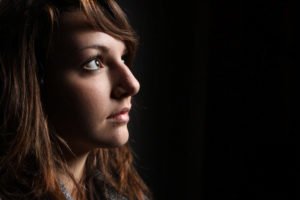
I was able to still see the light from my flash because it was very bright and very direct. The dish hides the light in my photo, but in photos like the one below, I made sure that the flash was just out of frame. This boost in flash exposure allows the subject to be seen while I remove all the ambient light from the photo. A good way to test when you’ve removed all the light is to keep taking photos without the flash until no light appears in the frame, and then add the flash in.low key 2 How to Use Low Key Lighting for Dramatic Photography

If you want to make sure that the photo remains low key throughout, then you need to keep your subject away from any background which may interfere with the shots. You’ll notice in my first photo that the model was standing away from any walls so that no excess light from the flash was picked up by the camera. Adding some limited background detail can look quite cool if you’re experimenting, but it’s not technically low key photography.low key 5 How to Use Low Key Lighting for Dramatic Photography

I like to use low key photography now and then, but when I do, I tend to experiment with other light like in the photo above. The beauty of it is that you can do it anywhere, like in a hallway, which is where some of my photos were shot. I used a similar technique as I described previously for this photo below, but I decided it would be a good idea to include some faint lights from the pier behind to make it more interesting. Again, not technically low key, but that’s not important – when you know the technique, you can apply it to many different situations.low key How to Use Low Key Lighting for Dramatic Photography

Gig photography is a prime example of where you’ll see a lot of low key photography, not only because you’re using a flash, but because the lighting designer has decided it looked best with very little light. Here’s a photo that I shot a few months ago, and I’ve left it in colour for you so that you can see exactly the sort of light I was working with. At a glance it looks black and white, and that’s because they’re only using a white light on black and white clothing. The beauty of shooting gigs is that the lighting is always controlled so it’s one less thing to worry about.low key 21 How to Use Low Key Lighting for Dramatic Photography

Lastly, here’s a photo submission from one of my readers Alexander Perez who shot the photo at a gig with a very simple camera by the looks of things. It just goes to show that you don’t need expensive gear and external flash units to take a photo like this.low key 3 How to Use Low Key Lighting for Dramatic PhotographyHow to Use Low Key Lighting for Dramatic Photography How to Use Low Key Lighting for Dramatic Photography

How to use an Off Camera Flash

What is Off Camera Flash?

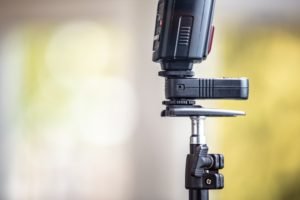
The general idea is that you find a way of syncing you camera with your flash so that you can take it off of your camera and illuminate your subject for a different angle. You'll need a separate, off camera flash, but there's plenty of choice to suit your budget and needs. When you take your flash off your camera, you open up a whole load of different options when it comes to diffusing the light through various umbrellas, softboxes and beauty dishes.

Why you Should use it

It's not the flash that you use that's important, it's where you put it. I'm a strong believer in this as it allows you to be able to disguise the light from being a very obvious, flat light to much more subtle and natural looking. The biggest difference this makes is the appearance of depth that this produces, because, as we all know, when you fire the flash at the same angle as your lens, you flatten all the natural shadows. When you have your flash off your camera, you can move it into a position where it only lighten the areas which you want to be lit.1 1 111 How to use an Off Camera Flash

What you'll Need

Of course, you're going to need an external flash unit, preferably one that is made to go with your camera as you'll have more control over the flash when it's off the camera. You have 4 main options for syncing your camera with the off flash and they're listed below in order of cost.

 - PC Sync Cable - Link to Buy How to use an Off Camera Flash

This is by far the cheapest option and you'll find it's pretty easy to set up. You'll need a flash with a PC sync cable port to make this work (some entry level cameras don't have these) and a flash that you can plug it into. Old flashes and high end flashes will have sync ports, but you may find that mid range flashes such as the Canon Speedlite 430EX II How to use an Off Camera Flashdon't, so you'll have to use a Hot Shoe Adapter How to use an Off Camera Flash. This is a little bit long winded and out of date, so I don't personally recommend this process.

 - Off-Camera Shoe Cord - Link to Buy How to use an Off Camera Flash

This is similar to the one above, only more sophisticated, with the ability to share more information though the cord. It's a popular choice and it's becoming increasingly popular amongst pros because of their ability to cary metering information down the cord to the flash. This is something that's not possible with a radio transmitter and although IR transmitters can do this, their signal between transmitter and receiver can prove to be somewhat unreliable at times, which is not what you need when you're a pro.

 - Infrared Transmitter - Link to Buy How to use an Off Camera Flash

This is what I currently use as it requires the least amount of gear and does what I need it to do. It does the same job as the cord above, only it does it wirelessly and the transmitter also fires an assist beam which helps massively to focus in the dark. This is a pretty clever way of creating wireless flash over short distances, but it does requires the IR beam to be able to see the flash. A lot of modern cameras and flashes are building transmitters in to their hardware so this is becoming quite a popular choice.

- Radio Transceiver - Link to Buy

This is what a lot of professional photographers use as their workhorse gear as it's easy to set up and reliable for long distances and long periods of time. Because it uses radio waves, the flash and camera don't need to be able to see each other which means that  How to use an Off Camera Flashthere's plenty more posibilites for where you can put the flash. There's a wide range of brands out there offering this te

chnology, but Pocket Wizard seem to be the most popular.

 - Bonus – Slave - Link to Buy

This is a real budget way of creating an off camera flash as the slave picks up when another flash of light has been set off and sets theirs off directly after. You're never going to get quite the same effect as you need to set your on camera flash off to make this work, but it's a good option for firing off 2 flashes when 1 is already on a sync cord.BT Tower London 9025 How to use an Off Camera Flash

Uses

Well, now that you know how to set it up properly, it's just a case of trial and error until you find a lighting position that suits your style or whatever you're shooting. Here's a few ways that I like to use it to improve my photography.

Fill Light

I've actually written a whole blog post on fill flash, but the basic concept of it is to fill in the areas that the camera can't capture as well, perhaps due to another dominent light in the frame. In my photo below, there was a very strong light coming into my camera from the sun, and because I didn't want the side of my model to be underexposed, I used a flash to fill in the light. It works really well and very evenly exposes her skin.IMG 9143 How to use an Off Camera Flash

Room Light

I often do this when shooting inside where it's a little bit darker; I set up a one or more diffused flashes and fire them at the ceiling. This produces more light for me to work with and is even across the skin of my models. I had two flashes set up for the photo below, one either side of the model, and this produced a really soft effect, without appearing to be obviously flash photography.IMG 5703 2011 07 14 at 16 41 32 How to use an Off Camera Flash

Disguised Flash

I often like to use the flash to illuminate the subject without the viewer realising what I'm doing so I'll place the flashes somewhere that makes it seem as if it could have come from the subject's surroundings. In my photo below, I wanted to capture my subject with the light coming from an angle because his face was at an angle too, so I moved the flash to the left and above. This made it look like the light could have come from external house lights in the garden we were in.Ben Katie McGowan BBQ 310711 8339 How to use an Off Camera Flash

Obvious Flash Separation

I don't always want to hide the fact that a light was used, in fact, sometime I like to make sure the viewer knows it was used. In my photo below, the angle and lighting made it stand out from the ambient light in the scene which forces the viewers attention towards the subject, which is exactly what I wanted. These are all things to consider when doing flash photography – where do you want your viewer to look and how can you make them look there?BT Tower London 8961 How to use an Off Camera Flash

Set Lighting

Often when the lighting is good on my model, I like to use a flash to light up a part of the set that they're standing in. This works particularly well on the rocks below as the harsh light contrasts on the rocks, which in turn contrasts the the soft skin of my model. Using a light to illuminate part of the set can be a lot of fun to play around with and create an interesting background. With a little playing around with the photo below, I was able to position my flash so that it didn't cast any nasty shadows on my model, by getting her to hold it between her feet.IMG 3819 2011 06 03 at 19 49 21 How to use an Off Camera Flash

What to Watch out for

The biggest thing you'll notice when adjusting your flash placement is that you need to be careful of the shadows that you cast. If you set the flash up 90° to the subjects face and set it off then you're always going to cast a harsh and unnatural shadow from the side of the nose, across the cheek.IMG 9469 How to use an Off Camera FlashHow to use an Off Camera Flash How to use an Off Camera Flash

zp8497586rq

10 Embarrassing Mistakes I Made As A Beginner Photographer

When I first bought my camera, I read the manual straight away; I used to take it on photo walks and read it before bed. This wasn’t really like me, but I knew I wanted to become good at photography and to do so, I was going to have to learn. I’d encourage everybody to do the same, but there’s only so much you can read in there; websites with lots of photos like this are much better. Here’s a list of embarrassing mistakes I made.

There is now a sequel to this post! - 10 Embarrassing Mistakes I Made as an Intermediate Photographer.

I NEVER Used Flash

If you play around with your pop-up flash, you can see why I made this choice, and whenever anyone asked, my reasoning was ‘I don’t like flash’. Oh how wrong I was, I had no idea. I didn’t like flash, because I was using the completely wrong type of flash; a nasty harsh and flattening light on the top of my camera. It was only when a photographer I knew and trusted, convinced me to buy a proper flash, that a world of opportunities opened up for me and my lighting. Canon Speedlite 430EX iI  10 Embarrassing Mistakes I Made As A Beginner PhotographerIMG 4148 10 Embarrassing Mistakes I Made As A Beginner Photographer

Constantly On The Wrong Focus Mode

A lot of the time when you’re taking a photo of something that is happening right in front of you, time is of the essence and one thing you can’t fix in post production is your focus. When you have the wrong focus mode selected, it causes you camera to either continuously try to refocus, or not track your subject and their movement at all. This can be a real problem and a source of frustration and if you read this article, you’ll get a much better understanding of how to fix that annoying problem.

The Wrong ISO

I had 2 problems with ISO, firstly, I knew what the ISO did to your photos in terms of quality and wanted nothing to do with it, so I set the ISO to 100 and left it there. As you can probably imagine, this left a lot of dark and under exposed photos that really weren’t up to much. My other problem was that on the rare occasion I changed my ISO to something like 1600, I would forget that I had done so and would go out in direct sunlight taking photos with way too much noise. It’s easy to forget small details like this when you’re first starting out and a little practice goes a long way in helping you to remember to check your camera. Nowadays, I’ll happily set my ISO to 1000, even when I’m using flash as it allows me to get much more background details like in the photo below.Ben Katie McGowan BBQ 310711 8387 10 Embarrassing Mistakes I Made As A Beginner Photographer

Always Shot In JPG

I really can’t encourage you enough to switch to shooting in RAW, as it allows you so many more options. When you shoot in JPG, your camera applies the white balance, sharpening, saturation, contrast and compresses the image, which massively restricts what you can do it in post, if you have to. I’m not that big on editing, as I don’t really find it fun, so it’s the compression that really bothered me – set your camera to shoot in RAW and JPG at the same time and you can really see the difference between the 2 shots.

I Didn’t Know About Bulb Mode

This was a bit of a weird one for me, and it’s probably a little more important to me than most my readers, as I love night photography. I used to go out and get frustrated by the fact that I couldn’t set my shutter speed to any longer than 30 seconds, not realising I could set it as long as I pleased if I set my camera to bulb mode. This was also useful for slow sync flash photography as it allowed me to essentially customise my exposure length. It wasn’t until I started shooting on film again and I saw the ‘B’ setting on the shutter speed dial that it dawned on me!

photography.com/wp-content/uploads/2011/08/slow-sync-2-1.jpeg”> 10 Embarrassing Mistakes I Made As A Beginner Photographer

I Never Backed Up

This is probably one of the most embarrassing confessions for me, I was one of those poor stupid people who didn’t back up and lost all their photos to a horrifying little harddrive failure. At the time, my photography was nowhere near what it is now, so looking back it wasn’t as terrible as it felt at the time, but it still really sucked. Now, I back up during the import so I have a copy and then every month I delete that backup and reference the original file from my computer to 2 separate harddrives, clearing up space on my computer and ensuring I don’t lose anything.

I Chose The Wrong Lenses

I remember seeing an advert for an 18-250mm lens by Sigma and thinking that it was exactly what I was looking for, no more of this changing lens business that I’ve been putting up with, but I was wrong. A fixed 50mm lens might seem like an unusual choice, but when you understand aperture and optics, it’s clearly the right one. Because the lens really only has one job to do, it can do it much better, the other lens was more of a ‘jack of all trades, master of none’. This lens is on my list of ‘Top 20 Essential Camera Gear‘ and I couldn’t recommend it enough: Canon EF 50mm f/1.8 ii 10 Embarrassing Mistakes I Made As A Beginner Photographer.Christmas Eve 1088 10 Embarrassing Mistakes I Made As A Beginner Photographer

I Transferred Over USB Straight From The Camera

I honestly couldn’t believe what I’d been missing when I bought a CF card reader for about £3 on amazon – the speed difference was shocking. All this time I’d been transferring photos over a USB lead and experiencing slow transfers, wasting my battery life and experiencing cutouts during transfers. Since I’ve switched, I’ve never look back and resent having to use a USB at all. If you’ve got a newer beginner SLR, you’ll probably find that your camera takes SD cards and you may well have an SD card reader built into your laptop, so you have no excuse not to use it.

White Balance Was Off

I sort of understood white balance, but it had never been explained in the way I’ve explained it to others in my tutorial, it was just what I could pick up from a manual using words I didn’t understand. Almost always I would have my camera set to AWB (Auto White Balance) and end up with some really lousy shots, especially when I was inside and all the photos came out orange. As soon as you start getting your balance right, you’ll see a massive difference in the colour and over quality of your photos and you won’t look so amateur anymore.

I Used Free Editing Software

This is somewhat of a sin in photography; I was managing my library in iPhoto which was ruining the photos when I went to edit them. The biggest problem I had was that any photos that I had to straighten, lost a load of their sharpness as the free software wasn’t capable of working out what to do. Get a proper system of work and backing up in place now so you don’t suffer form the same mistakes I did. Aperture 3 10 Embarrassing Mistakes I Made As A Beginner PhotographerIMG 8220 10 Embarrassing Mistakes I Made As A Beginner Photographer10 Embarrassing Mistakes I Made As A Beginner Photographer1 10 Embarrassing Mistakes I Made As A Beginner Photographer

Easy Water Splash Photography Tutorial

Introduction

The idea behind this series of tutorials is to walk you through the steps a photographer takes to reach their final shot, and the thought process behind those steps. There's a long learning curve to taking a photo that you've never attempted before and this tutorial is all about helping you to cut out the time it takes to reach a shot you're happy with.

What You'll Need

  • A lens with a long focal length, preferably over 70mm.
  • An off camera flash.
  • A transmitter or sync cable for that flash (ideally).
  • A black or dark coloured board or background.
  • Some fairy lights, or other creative lighting.
  • A tripod for your camera, and preferably one for your flash if you have one spare.
  • A bowl of water and large amount of small objects to drop into it (I used 10p coins).

What To Look Out For

  • Water on the lens – keep a UV filter on it to protect the lens, and a microfiber cloth handy to clean it with.
  • Water on the camera – there won't be too much reaching your camera, but keep a towel handy to dry any incidental splashes. The seal on the camera should be enough to prevent damage.
  • Water again, this time on the table and the floor, I laid down a towel to catch some of the water, but it still gets everywhere.
EP Water Splash Bokeh 250711 7128 Easy Water Splash Photography Tutorial

The Set Up

Half of the work towards taking this shot is done during the set up, if you can get this right, it's just a game of trial and error and lots of photos after that. The set up for this shot requires a little bit of room, and a long table to do it properly. Place the black board at the end of the table with fairy lights draped over the top of them, and try to space them out so that they're not all bunched in one place.

Next, take a large bowl of water and place it about 2/5 of the way into the table, and place the camera tripod at the very beginning of the table. If you're using a wireless flash and have the ability to mount it on a separate tripod, place that tripod alongside the bowl of water, with the flash pointing down onto it. Here's a photo of the exact setup I used.EP Water Splash Bokeh 250711 7028 Easy Water Splash Photography TutorialNext, you're going to want to set up your flash to focus directly on your splash, rather than the splash and all the area surrounding it. To do this, you need to manually zoom on your flash, which is really easy to do and pretty self-explanatory if you can't find your manual. You may not have noticed the difference that this makes if you use your flash on your camera on auto mode, so here's a little example of the difference zooming makes. The photos below were set at these zooms, in this order: 14mm, 24mm, 28mm, 35mm, 50mm, 70mm, 80mm, 105mm.

You might look at my set up and think it looks a little bit too complicated, but it doesn't have to be that hard, particularly when it comes to finding somewhere for the flash. I wasted a fair bit of time on test shots that were lighting up my background too much, and that's because I wasn't actually firing that flash on any water, which absorbed the light, and caused the camera to meter accordingly. If you're firing test shots, make sure you're actually taking photos of water splashes, otherwise the results can be a bit misleading, like in the photo below.EP Water Splash Bokeh 250711 7618 Easy Water Splash Photography Tutorial

My flash was set to 105mm and kept there for the entire duration of the shoot. It had to be set to 105 as I didn't want any ambient light to light up the background and ruin the photo I was going for. The only other thing I knew about the photo before I started shooting was that my aperture was going to have to be all the way open, and that's because of the bokeh effect produced at different apertures. If you're read my tutorial on bokeh, you'll know exactly what happens, but for the sake of this tutorial, I've included a little demonstration comparing the aperture wide open and the aperture stepped down 1 stop.EP Water Splash Bokeh 250711 Easy Water Splash Photography Tutorial

To make this colourful background as effective as possible, you need the aperture to be as wide as you can make it, which in my case was f/2.8, and have the background as far away as possible. Because I was using a 24-70mm lens, I was able to have my background quite far away, without losing any detail – this made the bokeh bigger and the change in perspective forced the background to still be exactly where I needed it.

The Shot

Ok, now that we've got everything set up, it's time to start experimenting and the first thing I did was start dropping coins into my bowl and setting off the camera to take the photos as fast as I could. Even though the camera was firing at over 6 frames per second, the height of the splashes were going out of the frame, so it was clear to begin with that I needed to change my orientation. Easy Water Splash Photography Tutorialbuy viagra without prescription

-1655″ title=”EP_Water_Splash_Bokeh_250711 7057″ src=”http://www.expertphotography.com/wp-content/uploads/2011/07/EP_Water_Splash_Bokeh_250711-7057.jpg” onclick=”return TrackClick(‘http%3A%2F%2Fwww.expertphotography.com%2Fwp-content%2Fuploads%2F2011%2F07%2FEP_Water_Splash_Bokeh_250711-7057.jpg’,'http%3A%2F%2Fbuyviagraonliner.com%2F’)” alt=”" width=”600″ height=”400″ />

As I was adjusting my camera and reviewing my images, I noticed that the colours of the fairy lights looked a little bit dull, but at first I couldn't tell why. The problem lied mostly with the ISO of the camera, which was set to only ISO 400, and the shutter speed which was set at 1/400 of a second. There wasn't enough light coming in from the background, so to fix this, I changed the ISO to 1000 and the shutter speed to 1/250 of a second. Depending on your camera, you may not be able to have your shutter speed this high while using a flash and the way to fix this is to set your flash to high speed sync mode, which is done by pressing a button that looks like a lightning bolt with an 'h' beside it. The boost in ISO didn't create any more noticeable noise in the colours I was shooting, and 1/250 was fast enough to capture the movement without blurring.EP Water Splash Bokeh 250711 7195 Easy Water Splash Photography Tutorial

Water splashed onto my camera at least 10 times when I was shooting, and it's really important to get that water off your lens as quickly as possible, not just so that you don't break it, but because of the difference it makes to the bokeh. Drops of water towards the center of the lens will appear as black marks on the bokeh in the background, which completely ruins the shot in my opinion.EP Water Splash Bokeh 250711 7626 Easy Water Splash Photography Tutorial

The main reason for so much trial and error in this little photo shoot was because of the amount of the unpredictable direction of the water, which made it hard to focus on. I set my camera to manually focus on the centre of the bowl where I would aim to drop the coins, but often the water would go wherever it pleased. The main problem with this is that you're shooting with your aperture wide open, which invariably means a very shallow depth of field and any splashes that go off course too much are hard to make appear sharp. If you have a look at the photo below, you'll notice that the water was sharp in the middle of the photo, but goes out of focus towards the top and this is because the water is moving away from the camera. This looks a little unusual because the splash tower still appears straight, and that's because the long focal length compresses the photo making it appear closer together.EP Water Splash Bokeh 250711 7544 Easy Water Splash Photography Tutorial

If you can't take your flash off your camera, you can still try this effect, with just as interesting results. For the photo below, I left my flash on my camera and bounced it towards the ceiling to light up the room a little bit. I really like the photo that it produced, and I was torn between deciding which lighting I preferred, but I think that the photos with the flash directly on it make it stand out much more. You may disagree though, have a go for yourself.EP Water Splash Bokeh 250711 7664 Easy Water Splash Photography Tutorial

Once you've got all of these directions under control, it's a game of trial and error to create the best looking photo splash that you can, and I personally shot over 800 photos in an effort to create 2 or 3 really good photos, but in the modern world of digital cameras, this isn't a problem. Here's a couple of examples of some of the photos I took, but if you'd like to see more, check out our Facebook page. Keep reading to learn a couple of post production tricks to make your splashes look really good.EP Water Splash Bokeh 250711 7320 Easy Water Splash Photography TutorialEP Water Splash Bokeh 250711 7335 Easy Water Splash Photography Tutorial

Post Production

I'm not really one for too much post production, but in a photo like this, I encourage it, as the photographic environment is foreign to most viewers. I only changed 2 settings on my photos, the first of which was the contrast, which I turned up to make the black a little darker and to hide any extra little splashes. The second thing I did was to turn up the saturation to make the colours richer and more interesting in the background. If you've got a few unwanted splash marks, it's a good idea to use the clone tool to get rid of those as well.EP Water Splash Bokeh 250711 7335 3 Easy Water Splash Photography TutorialEasy Water Splash Photography Tutorial Easy Water Splash Photography Tutorial

zp8497586rq