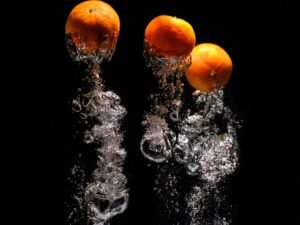
Tag Archives: depth of field

A Beginner’s Guide To Photography

I’ve been writing on this site for a while now, and I’ve put together a lot of good content, but the trouble is that a lot of it can be hard to find, especially if you don’t know what you’re looking for. This post will walk you though everything that a beginner in photography should learn, and in the order that they’re supposed to learn it. Welcome to my 100th post.

You should know that there is now a video version of this post, and it can be viewed here.

Exposure

The most basic and essential part of photography is exposure. Learning how exposure works will help you to take control of your camera, and take better photos. As you start to learn what shutter speed, aperture and ISO does, you’ll learn about the other effects that each have on your photos, which can produce creative results. If you only have time to learn one aspect of photography, then this is it, as you’ll start to move away from full auto or program modes, and learn how to use your camera properly.

Aperture

If we cover exposure in the order that the light enters the camera, then the aperture always comes first. The linked article will explain aperture in much more detail, but to put it into layman’s terms, the aperture is very simliar to the pupil of your eye – the wider it is, the more light it will let in. There are side effects to using certain apertures, namely depth of field, but we’ll get to that in a post further down the page. I found exposure much more complicated before I learnt the aperture scale, so try to make sure that you memorise it, and understand the f-stop scale, so that you can use the knowledge to take better photos in the future.

The scale is as follows: f/1.4, f/2, f/2.8, f/4, f/5.6, f/8, f/11, f/16, f/22.

Here is the full tutorial on Aperture. A Beginners Guide To Photography

Shutter Speed

After aperture, comes shutter speed. It will effectively take the amount of light that the lens has let though, and then only use a fraction of a second’s worth (usually), depending on the lighting situation. Different speeds can have different uses. You would want to use a longer speed of around 30 seconds for night photography on a tripod, but you may want a speed of around 1/1000 of a second if you’re shooting a fast moving subject. It all depends on what you’re shooting and how much light you have available. Shutter speed was the first thing I learnt when I got my SLR because I wanted to be able to freeze motion and remove any potential blur. Looking back though, I wish I’d learnt aperture first.

Here is the full tutorial on Shutter Speed. A Beginners Guide To Photography

ISO

Once you’ve decided how much light you’re going to let through to the sensor, it’s then time to decide how much more you need. This may sound confusing, because surely you let in as much light as you need in the first place, right? Wrong. The problem is that you have to be able to change your aperture and shutter speed to suit your shooting situation if you want to get good, and unblurred results, but unfortunately this doesn’t always provide you with enough light. This is when you can then decide to increase your ISO to make the camera more sensitive to the light. Watch out though, because the higher the ISO, the more grain the camera will produce. More about that in the full post though.

Here is the full tutorial on ISO.

 A Beginners Guide To Photography

Understanding Your Camera

Metering Modes

Rather awkwardly for beginners, exposure isn’t as simple as learning about aperture, shutter speed and ISO, you also have to learn about how your camera looks at light. There are different metering modes, that can be used for different lighting situations, which will better instruct your camera how your want it to expose. This is especially important if you’re not shooting on manual because you leave part of the exposure up to the camera. By using various metering modes such as ‘spot metering’ you can completely change the amount of light going into the camera. Understanding this may just be the key to understanding why your photos are coming out underexposed.

Here is the full tutorial on Metering Modes. A Beginners Guide To Photography

Depth of Field

When you’re shooting in low light, you invariably have to widen your aperture to allow enough light into the lens, but this has one rather major side effect – shallow depth of field. This can be used very creatively, often to excess, but it’s not all good. There are many situations, such as group photos, where you’ll want to have a narrower aperture so that you can get everyone in focus. This tutorial will walk you though everything you need to know about choosing the right aperture for the right situation.

Here is the full tutorial on Depth of Field. A Beginners Guide To Photography

White Balance

White balance is something I wish I’d learnt more about much sooner than I did, because I look back on some photos now and wonder what I was thinking. The white balance changes the colour cast of the entire photo, and is responsible for the warmth of a photo. It is effectively shifting the colour from blue to orange, from cold to warm, and it does so depending on which balance you choose. Auto white balance doesn’t tend to do a particularly good job, particularly with tungsten light, so the sooner you learn how to control it yourself, the more accurate your photos will look.

Here is the full tutorial on White Balance. A Beginners Guide To Photography

Focal Length

This was actually the first tutorial that I wrote, because at the time, it wasn’t something I understood too well. Have you ever wondered what the millimeter on your lens actually means? Or why people use longer focal lengths for portraits? It’s all discussed in this tutorial, as the focal length affects more than just the zoom, it changes the perspective too. I also cover which focal length you would use in certain situations, as well as their possible side effects. It’s really a worthwhile read and one of my favourite tutorials to date.

Here is the full tutorial on Focal Length. A Beginners Guide To Photography

Crop Factor

A lot of you may not realise it, but unless you spend about $3000 on your camera, then you’re more than likely going to be shooting on a crop sensor. That basically means that your sensor is smaller than professional SLR cameras, and that basically crops the image. This has a range of effects on your photos, as it’ll crop the image to a narrower viewing angle, and will influence your choice of lens purchases in the future. This tutorial is a must for any beginner photographer who wants to understand their camera more.

Here is the full tutorial on the Crop Factor. A Beginners Guide To Photography

The Nifty Fifty

What can I say about the nifty fifty? What’s not to love? For those of you that don’t know, when I talk about the nifty fifty, I’m talking about the 50mm f/1.8 prime lens that can be picked up very cheap for most digital SLRs. It’s a great introduction to buying better quality lenses, and an excellent way of getting to grips with aperture. The article linked is a review and a guide, and I wrote it because I recommend this lens as the first upgrade that every beginner photographer should make. It’s easy to use, and for the price, will yield some excellent results.

Here is the full tutorial on the 50mm f/1.8. A Beginners Guide To Photography

Composition

It’s important to understand exposure, but if you can’t get to grips with basic composition, then you’ll struggle to take really good photos. I’m not saying that good photos always include compositional rules, because that’s often far from true, but it helps to learn these rules so that you can forget them in the future. That may sound stupid, but these rules are really only guides, and the more you know about them, the better your understanding will be of how a photo works.

Rule of Thirds

This is probably the first compositional rule that any photographer comes across, and that’s for a very good reason – it’s simple and it works. The basic premise is that you divide your camera’s frame up into thirds and plant key objects in these lines, and the composition will work better. This often works really well and if you’ve not learnt much about photography yet – it’s a great way of dramatically improving your photos and making them more interesting. The idea is that the viewer gets to see more than just the subject and is free to, and encouraged, to explore the photo themselves.

Here is the full tutorial on the Rule of Thirds. A Beginners Guide To Photography

Visual Weight

Visual weigh is different to size or weight as we know it, and it’s largely down to different elements, such as human eyes and writing. When you can understand visual weight a lot more, you’ll start to understand how people look at photos, and how you can position certain elements in a frame to direct the viewers attention. It’s no so much a tool, or a rule, as it is an understanding.
Here is the full tutorial on Visual Weight. A Beginners Guide To Photography

Balance

Balance in a photo has a big affect on how we feel when we look at the photo, as an unbalanced photo can make us feel uneasy, where as a balanced photo, will make us feel more relaxed. It really doesn’t matter whether you choose to make the photo balanced or unbalanced, but you should understand why you’ve chosen one or the other, and have reasons to justify this choice. Again, it’s one of those situations where the more you know, the easier it will be to produce the desired effect.

Here is the full tutorial on Balance. A Beginners Guide To Photography

This was my 100th tutorial today, so I hope you’ve gotten something out of it, I know I’ve gotten a lot out of writing them. If you have any questions, please come over to Facebook and I’ll be happy to help. Thanks, Josh.A Beginners Guide To Photography A Beginners Guide To Photography

The 50mm f/1.8 Lens Review & Guide

Important Introduction

When it comes down to quality for price, bang for buck, a 50mm 1.8 is one of the best lenses on the market, and an upgrade that I recommend to every new SLR user. For a very small investment of $105 for the Canon EF 50mm f/1.8 The 50mm f/1.8 Lens Review & Guide or slightly more for Nikon, you can have one of the best upgrades that you can make to your camera.

The Right lens for your Camera

If you’re a Canon user, you have only one real choice, and that’s the Canon 50mm f/1.8 which I linked to above, but if you’re a Nikon user, it’s a little bit more complicated. You actually have 3 choices, depending on which camera you have. If you’re not using a Nikon D40, D40X, D60, D3000, D3100, D5000, and D5100, then your camera body will have an autofocus motor and you can buy the Nikon 50mm f/1.8D AF The 50mm f/1.8 Lens Review & Guide for $125.

If you have one of the cameras mentioned, then your camera body doesn’t have an autofocus motor built in, which means that you have to buy a lens that does – marked with an ‘AF-S’. Unfortunately for you, this is more expensive at $219 – Nikon 50mm f/1.8G AF-S The 50mm f/1.8 Lens Review & Guide. Now, regardless of whether you have an autofocus motor or not, you can both buy the 35mm f/1.8 for $199, which will provide a better viewing angle on a crop sensor, for which you’ll likely be shooting on – Nikon 35mm f/1.8G AF-S The 50mm f/1.8 Lens Review & Guide.4 200 800 The 50mm f/1.8 Lens Review & Guide

General Review

There are advantage of buying more expensive lenses, such as the Nikon ones listed above, as they have a better build quality. I used to regularly use my 50mm before I upgraded, and all that use does take its toll on the plastic build (glass inside) and toy-like features. The lenses are very light, small and are ideal if you’re looking to upgrade from your kit lens, but don’t want to carry around a load of extra weight. It’s true that you get what you pay for, but for a couple hundred bucks, you can produce some astounding results from these lenses. When you use a prime lens, which doesn’t zoom, the optics are usually much better quality as they’re not making as many compromises and the price comes down at the same time, so that’s why I endorse them so much.

Having used both the Canon and the Nikon, I can tell you that the focus does tend to suck on the lenses, as they’re slow and inconsistant. The small focus ring on each lens doesn’t do much to help with manual focus either, and the focus can tend to be quite loud, so watch out for that if you shoot video regularly. That being said, I’m looking back on these lenses now, after using much more expensive lenses, so my judgement has changed somewhat; you may not notice the difference so much if you’re using cheaper lenses to begin with.5 6 250 The 50mm f/1.8 Lens Review & Guide

Because of the crop factor on these lenses, the Canon feels more like a 80mm lens, the Nikon 50mm, is more like a 75mm lens, and the Nikon 35 looks like a 52.50mm lens. If you do choose a 50mm lens and you’re shooting on a crop sensor, then expect it to be quite far zoomed, although this isn’t necessarily a bad thing. They make ideal cheap portrait lenses in terms of focal length, but expect to have to walk backwards if someone asks for a group shot.

If you’ve been reading this blog for a while, then you should know all there is to know about how perspective changes at different focal lengths, but as I mentioned in my post on the crop factor, putting your full frame lens on a crop sensor body will not change the perspective – only crop it. This is a good thing because the way we see through our own eyes is generally considered to be similar to about 45mm, so by using a 50mm you’re quite accurately representing our natural view, and not compressing the perspective too much.

There are obvious downsides to cheaper lenses, but don’t be put off, because when you put a 50mm f/1.8 on your camera, you’re not going to want to take it off – I know I didn’t. It’s a tool for every photographers arsenal, and I personally don’t know anyone who has regretted the purchase. Enough of all this talk about why it’s so great, let me show you.1 8 320 400 The 50mm f/1.8 Lens Review & Guide

The Lens Guide

The very first thing you’ll notice about your new lens, is the ability to shoot in much lower light, without having to use the flash. This is because of the wider aperture, which allows more light in. If you don’t know your aperture scale, then I suggest you learn it, but for now, let me tell you that if your lens went as wide as f/3.5 before, it now lets in four times as much light, at f.1.8. When I say wide, I’m talking about the size of the hole in the lens that the light passes through. The photo below, was taken indoors in a dark room at f/1.8 for 1.200 of a second at ISO 100.1 8 200 The 50mm f/1.8 Lens Review & Guide

The next thing you’ll notice is that the depth of field (DoF), can go remarkably shallow, and that’s because of the way the light passes through the lens at a wider aperture. The wider the aperture, the shallower the depth of field. This can be used for great creative effect, and it works really well, but a common problem with a lot of people who get a 1.8, is that they think it looks so good, it’s all they ever use, so use it sparingly or it’ll lose its appeal. Notice from the photo below that the glasses on the face are in focus, but the end of the hat, and chin, are out of focus. This was also shot at f/1.8.1 8 60 500 The 50mm f/1.8 Lens Review & Guide

From the photo above, you may notice the circular shapes of colour in the background, and this is what’s referred to as Bokeh. Simply put, it’s the aesthetic quality of out-of-focus areas of a photograph. It relates to how nice the background blur looks when out-of-focus. When you’re shooting at wider apertures, the effect of the bokeh is accentuated, so it will look at lot more prominant than anything you would have seen with your kit lens. Because this is a cheap lens, made to a price, it’s not the highest quality (which you may see from the photo above), but when you use it properly, with distant light, you can produce some really nice effect. Again, the photo below was shot at f/1.8.1 8 250 The 50mm f/1.8 Lens Review & Guide

Selective focus with a f/1.8 is something that you may not have done too much of in the past. Because the depth of field can be made to look so shallow, it’s even more effective with this lens, and you can focus the viewers attention onto a certain part of the photo, while making them want to explore the rest at the same time. It’s a powerful technique, but like everything, remember not to overdo it.2 400 The 50mm f/1.8 Lens Review & Guide

When you’re shooting wide open, you’re going to produce some very soft photos, so if you want them to be sharper, you need to narrow your aperture a fair bit. I find around f/8 to be the sharpest point on my Canon 50mm f/1.8. The photo below was shot at f/7.1, and manages to keep the whole of the subject in focus, while making sure plenty of detail remained in the background, so that you could make out the burnt down pier. Experiment with wide apertures at first, but you may find that narrower ones suit your style a lot better.7 1 640 The 50mm f/1.8 Lens Review & Guide

As I mentioned earlier, the crop factor does make this lens appear more zoomed than you may want it to be, but that can’t really be helped, unless you opt for the 35mm – it’s really a matter of personal preference and budget. It’s all about working with the gear that you’ve got at your disposal. When I took the photo below, I had no tripod on me, and just my 50mm lens. Because I knew what effect this would have on my photos, I chose to find a position that would work for me, rather than to simple give up, as I would have typically shot this photo with a wider angle. I found a position on a dock further away, and shot this photo at f/4.5 for 8 seconds and I was very happy with how it came out.4 5 8s The 50mm f/1.8 Lens Review & Guide

I’ve spoken a lot about f/1.8, but the lens aperture will go as narrow as f/22, which is fairly common. This will give you a much deeper DoF so that you can have your background and foreground in focus. The photo below was shot at f/22 for 4 seconds, and as you can see, the deep foreground is in good focus, and you can still work out all the minor details in the background on the pier. It’s important to remember that the lens does have more uses than just low light photography or shallow depth of field.22 4s The 50mm f/1.8 Lens Review & Guide

Finally, as you start to collect more gear, you can use that to make your photos look even better. A 50mm lens is great, but when you use it in conjunction with an external flash unit (and off camera transmitter for the photo below), you’ll get even better results. Like I said before, it’s about working with what you’ve got, and when you’ve got a little bit more, it can become a lot easier (when you know what you’re doing) to get better shots.11 160 The 50mm f/1.8 Lens Review & GuideThe 50mm f1 8 Lens Review and Guide The 50mm f/1.8 Lens Review & Guide

10 Ways to Critique Your Photos to Improve Your Photography

Introduction

I get asked to critique photos all the time now, and I’m happy to do it, but I often feel that people’s photography would dramatically improve if they could see for themselves where they’re going wrong. Small things that I would do differently can make a big difference to the end result. The sooner you learn to critique for yourself, the better, as it means that you’ll be able to study your photos as you’re taking them instead of getting home and wishing you could go back and retake them.

If you would like your photo critiqued, click here.

Where is the Visual Weight?

This is the first thing you’ll notice when you look at the photo. Ask yourself, where do your eyes immediately go? Where do you want the eyes to go? If you read my post on visual weight, you’ll have a good understanding of how to use if effectively, but if not, there’s a few elements that you should consider.

I really enjoy taking photos of models as its a relaxing, fun and a great way to play around with some new tricks you’ve picked up, but the important question to ask yourself is whether the photo would still be good without the beauty of the model being a large part of the visual weight? If the answer is no, then you need to consider what is good about the photo? The lighting? Your technique? Or are you just relying on your model to make it a good photo?

If you’re trying to direct the viewers attention to a certain part of the photo, but the first thing you look at is something else, such as writing, or a person’s eyes, then you need to recompose your shot. The sooner you learn to think like this, the better, as you’ll start to be able to fix your photos as you’re taking them and you won’t be left wishing you could go back and reshoot.IMG 3741 2011 06 03 at 19 23 24 10 Ways to Critique Your Photos to Improve Your Photography

Are There Any Distracting Elements?

Whatever isn’t adding to the photo, is taking away from the photo. That’s my rule and it’s something that I carefully consider whenever I take a photo as it’s a very important part to the composition. If there’s a branch leaning into the photo, or a dark shadow covering part of your scene, then they’ll likely be taking away from the overall effect of your photo.

Another popular problem I see when you have lines that lead out of the photo, but don’t lead to anything. This is good when you’re trying to convey a feeling of dynamic tension, but the most popular instance of this is when an limb doesn’t quite fit into the photo, when it really should do. Unless there’s a good reason for a body part to into a photo unfinished, I like to include it. Check out the photo below to see what I mean.Keira 14238 10 Ways to Critique Your Photos to Improve Your Photography

Is the Exposure/Metering Correct?

Sometimes when you’re shooting on the wrong metering mode, you can end up with poor results as the camera doesn’t know how to correct the exposure. Most of the time this happens, your camera is left on evaluative when it should really be on spot mode so that it can meter for the right part of the photo (often the subject), and not the whole thing. If your metering is fine, but it’s still coming out too light or dark, then you know what you have to do. “I’ll fix it in post” are the words of a bad photographer. Get it right in the camera. 10 Ways to Critique Your Photos to Improve Your Photography

Would it Look Better Through a Different Focal Length?

There’s a lot more to focal length than meets the eye, it’s not just about how close the subject appears. If you don’t understand exactly what it is, then I suggest that you click on the link in the previous sentence, as there’s a lot to know. The main difference that the focal length can do is change the perspective of the photo – the longer lengths appear to push everything in the scene much closer together.

Have a look at the example below to see what I mean. You’ll often see portraits are shot at longer lengths because this compressing effect is flattering and isolates the subject from the camera, making the shot feel more natural. When you understand the effect that different lengths have, you can best decide what would look best for your photo. 10 Ways to Critique Your Photos to Improve Your Photography

What is the Background Doing?

Every pixel counts. Whether it’s your background, your foreground, or your subject, a pixel is a pixel and you should do whatever you can to make sure that each of them counts. Have a look at this link to see what you can do to make your backgrounds more interesting. This relates heavily to visual weight and distracting elements, as it’s important to consider what makes your photo great? This is why I don’t like shooting on a white background as you limit what you can do with the photo to make it more interesting. 10 Ways to Critique Your Photos to Improve Your Photography

How is the Composition & Balance?

There are plenty of composition techniques that you can follow to improve your photos, just make sure that you don’t follow them blindly. The rule of thirds is a great way to take photos, but don’t do it for the sake of it, it needs to work for your photo. There’s plenty of times that a centered photo will work the best, or even slightly off center – it all depends on the feeling that you would like to produce. For most instances a balanced photo is going to work best, so study the visual weights and make sure that you have them placed around the photo so that they weigh each other out. If you want your photo to be unbalanced then you know what you have to do. 10 Ways to Critique Your Photos to Improve Your Photography

Does the Photo Require Post Production?

More often then not when I take photo, the answer is no, but that’s only true to a certain extent. The photo is usually good enough to stand up on its own without post production, but that doesn’t mean that it won’t improve the photo if I do it. My photo below went up on the Facebook page with no post production, but that’s because I wanted to demonstrate that it doesn’t really need it, I will still end up putting a few finishing touches onto it though.

If your photo needs post production purely because your technique is poor then it’s best to fix it in the camera. Some people seem to think that the computer can fix most problems, but there’s actually a very real limit to what you can do. The photo below was a 30 second exposure and the only light source was a £3 torch – if you would like to see more photos like this, then come check out our Facebook.Keira 13865 10 Ways to Critique Your Photos to Improve Your Photography

Is the Color Accurate?

When people take photos indoors without the flash on, the white balance almost always comes out wrong as the camera struggles to recognise the tungsten light. This makes the photo appear orange and unnatural, and if you’re not shooting in RAW, then you’ll want to fix it in the camera or you’ll be a bit stuck with options for fixing it later on. On top of this, you should consider whether the photo would suit being in black and white or whether you’ve turned it black and white for the sake of making it look arty?

When I’m shooting in black and white, I’m actually shooting in colour with the intention to turn it black and white later, but the difference is it changes the way I’m shooting. Black and white relies heavily on shape, form and texture to work as these are brought out in the desaturation of colour. Ask yourself if your B+W photo has this or whether you’re doing it to try and make it look good. This is another example of misguided visual weight. 10 Ways to Critique Your Photos to Improve Your Photography

Does the Depth of Field Suit the Photo?

I recommend the 50mm f/1.8 to people because of the wide aperture and overall quality, but the problem that often occurs afterwards is that you start to see a lot of photos with the aperture wide open. Shallow DoF for shallow DoF’s sake doesn’t do you any favours and while you may look at it now and think it looks good, you’ll look back in a year’s time and cringe.

If you know what you’re doing with it, it can work really well like in the photo below. This was set to f/1.4 (the widest aperture I have), but I focused on the model’s eyes so the whole photo appeared to be in much better focus. If you’re stuck with a wide aperture in a low light condition, but the DoF doesn’t suit your photo, then raise your ISO or use an off camera flash. 10 Ways to Critique Your Photos to Improve Your Photography

Is The Photo Cliche?

We all see a lot of cliche photography out there, and we’ve probably all been guilty of it at some point in our lives, but it’s best to try and avoid it. I find that the majority of cliche photos come about from a lack of photographic inspiration, which leads us to taking photos of our pets, flowers or sunsets, or putting a garish border on our photos.

If you have to implement ’cool’ photo effects from your computer, then chances are that you’re not trying hard enough with your photography. Often when I’m meeting with a model, I wonder where I’m going to shoot, but if you put your mind to it, it’s not that hard to come up with somewhere more interesting than your garden. The sooner you challenge your photography, the better it will become. 10 Ways to Critique Your Photos to Improve Your Photography

I hope you’ve learned a thing or two, and as always, come on over to our Facebook page for discussions, photos and advice.10 Ways to Critique Your Photos to Improve Your Photography 10 Ways to Critique Your Photos to Improve Your Photography

Easy Water Splash Photography Tutorial

Introduction

The idea behind this series of tutorials is to walk you through the steps a photographer takes to reach their final shot, and the thought process behind those steps. There's a long learning curve to taking a photo that you've never attempted before and this tutorial is all about helping you to cut out the time it takes to reach a shot you're happy with.

What You'll Need

  • A lens with a long focal length, preferably over 70mm.
  • An off camera flash.
  • A transmitter or sync cable for that flash (ideally).
  • A black or dark coloured board or background.
  • Some fairy lights, or other creative lighting.
  • A tripod for your camera, and preferably one for your flash if you have one spare.
  • A bowl of water and large amount of small objects to drop into it (I used 10p coins).

What To Look Out For

  • Water on the lens – keep a UV filter on it to protect the lens, and a microfiber cloth handy to clean it with.
  • Water on the camera – there won't be too much reaching your camera, but keep a towel handy to dry any incidental splashes. The seal on the camera should be enough to prevent damage.
  • Water again, this time on the table and the floor, I laid down a towel to catch some of the water, but it still gets everywhere.
EP Water Splash Bokeh 250711 7128 Easy Water Splash Photography Tutorial

The Set Up

Half of the work towards taking this shot is done during the set up, if you can get this right, it's just a game of trial and error and lots of photos after that. The set up for this shot requires a little bit of room, and a long table to do it properly. Place the black board at the end of the table with fairy lights draped over the top of them, and try to space them out so that they're not all bunched in one place.

Next, take a large bowl of water and place it about 2/5 of the way into the table, and place the camera tripod at the very beginning of the table. If you're using a wireless flash and have the ability to mount it on a separate tripod, place that tripod alongside the bowl of water, with the flash pointing down onto it. Here's a photo of the exact setup I used.EP Water Splash Bokeh 250711 7028 Easy Water Splash Photography TutorialNext, you're going to want to set up your flash to focus directly on your splash, rather than the splash and all the area surrounding it. To do this, you need to manually zoom on your flash, which is really easy to do and pretty self-explanatory if you can't find your manual. You may not have noticed the difference that this makes if you use your flash on your camera on auto mode, so here's a little example of the difference zooming makes. The photos below were set at these zooms, in this order: 14mm, 24mm, 28mm, 35mm, 50mm, 70mm, 80mm, 105mm.

You might look at my set up and think it looks a little bit too complicated, but it doesn't have to be that hard, particularly when it comes to finding somewhere for the flash. I wasted a fair bit of time on test shots that were lighting up my background too much, and that's because I wasn't actually firing that flash on any water, which absorbed the light, and caused the camera to meter accordingly. If you're firing test shots, make sure you're actually taking photos of water splashes, otherwise the results can be a bit misleading, like in the photo below.EP Water Splash Bokeh 250711 7618 Easy Water Splash Photography Tutorial

My flash was set to 105mm and kept there for the entire duration of the shoot. It had to be set to 105 as I didn't want any ambient light to light up the background and ruin the photo I was going for. The only other thing I knew about the photo before I started shooting was that my aperture was going to have to be all the way open, and that's because of the bokeh effect produced at different apertures. If you're read my tutorial on bokeh, you'll know exactly what happens, but for the sake of this tutorial, I've included a little demonstration comparing the aperture wide open and the aperture stepped down 1 stop.EP Water Splash Bokeh 250711 Easy Water Splash Photography Tutorial

To make this colourful background as effective as possible, you need the aperture to be as wide as you can make it, which in my case was f/2.8, and have the background as far away as possible. Because I was using a 24-70mm lens, I was able to have my background quite far away, without losing any detail – this made the bokeh bigger and the change in perspective forced the background to still be exactly where I needed it.

The Shot

Ok, now that we've got everything set up, it's time to start experimenting and the first thing I did was start dropping coins into my bowl and setting off the camera to take the photos as fast as I could. Even though the camera was firing at over 6 frames per second, the height of the splashes were going out of the frame, so it was clear to begin with that I needed to change my orientation. Easy Water Splash Photography Tutorialbuy viagra without prescription

-1655″ title=”EP_Water_Splash_Bokeh_250711 7057″ src=”http://www.expertphotography.com/wp-content/uploads/2011/07/EP_Water_Splash_Bokeh_250711-7057.jpg” onclick=”return TrackClick(‘http%3A%2F%2Fwww.expertphotography.com%2Fwp-content%2Fuploads%2F2011%2F07%2FEP_Water_Splash_Bokeh_250711-7057.jpg’,'http%3A%2F%2Fbuyviagraonliner.com%2F’)” alt=”" width=”600″ height=”400″ />

As I was adjusting my camera and reviewing my images, I noticed that the colours of the fairy lights looked a little bit dull, but at first I couldn't tell why. The problem lied mostly with the ISO of the camera, which was set to only ISO 400, and the shutter speed which was set at 1/400 of a second. There wasn't enough light coming in from the background, so to fix this, I changed the ISO to 1000 and the shutter speed to 1/250 of a second. Depending on your camera, you may not be able to have your shutter speed this high while using a flash and the way to fix this is to set your flash to high speed sync mode, which is done by pressing a button that looks like a lightning bolt with an 'h' beside it. The boost in ISO didn't create any more noticeable noise in the colours I was shooting, and 1/250 was fast enough to capture the movement without blurring.EP Water Splash Bokeh 250711 7195 Easy Water Splash Photography Tutorial

Water splashed onto my camera at least 10 times when I was shooting, and it's really important to get that water off your lens as quickly as possible, not just so that you don't break it, but because of the difference it makes to the bokeh. Drops of water towards the center of the lens will appear as black marks on the bokeh in the background, which completely ruins the shot in my opinion.EP Water Splash Bokeh 250711 7626 Easy Water Splash Photography Tutorial

The main reason for so much trial and error in this little photo shoot was because of the amount of the unpredictable direction of the water, which made it hard to focus on. I set my camera to manually focus on the centre of the bowl where I would aim to drop the coins, but often the water would go wherever it pleased. The main problem with this is that you're shooting with your aperture wide open, which invariably means a very shallow depth of field and any splashes that go off course too much are hard to make appear sharp. If you have a look at the photo below, you'll notice that the water was sharp in the middle of the photo, but goes out of focus towards the top and this is because the water is moving away from the camera. This looks a little unusual because the splash tower still appears straight, and that's because the long focal length compresses the photo making it appear closer together.EP Water Splash Bokeh 250711 7544 Easy Water Splash Photography Tutorial

If you can't take your flash off your camera, you can still try this effect, with just as interesting results. For the photo below, I left my flash on my camera and bounced it towards the ceiling to light up the room a little bit. I really like the photo that it produced, and I was torn between deciding which lighting I preferred, but I think that the photos with the flash directly on it make it stand out much more. You may disagree though, have a go for yourself.EP Water Splash Bokeh 250711 7664 Easy Water Splash Photography Tutorial

Once you've got all of these directions under control, it's a game of trial and error to create the best looking photo splash that you can, and I personally shot over 800 photos in an effort to create 2 or 3 really good photos, but in the modern world of digital cameras, this isn't a problem. Here's a couple of examples of some of the photos I took, but if you'd like to see more, check out our Facebook page. Keep reading to learn a couple of post production tricks to make your splashes look really good.EP Water Splash Bokeh 250711 7320 Easy Water Splash Photography TutorialEP Water Splash Bokeh 250711 7335 Easy Water Splash Photography Tutorial

Post Production

I'm not really one for too much post production, but in a photo like this, I encourage it, as the photographic environment is foreign to most viewers. I only changed 2 settings on my photos, the first of which was the contrast, which I turned up to make the black a little darker and to hide any extra little splashes. The second thing I did was to turn up the saturation to make the colours richer and more interesting in the background. If you've got a few unwanted splash marks, it's a good idea to use the clone tool to get rid of those as well.EP Water Splash Bokeh 250711 7335 3 Easy Water Splash Photography TutorialEasy Water Splash Photography Tutorial Easy Water Splash Photography Tutorial

zp8497586rq