Tag Archives: composition

The 10 Step Process To Capturing What You See

I know the frustration, I’ve heard it before, and I’ve said myself.

“How do I just capture what I see through the viewfinder, on the screen?”

When you buy your SLR, your first thought is quality, and control. That’s what the camera gives you. So it can be incredibly frustrating when you pick up your camera, and it’s just not doing what you want it to.

From what I remember, it comes from a range of problems. The pop-up flash keeps kicking in, the shutter speed isn’t letting enough light in, or there’s too much blur, perhaps the depth of field is all wrong. The list goes on.

This post is all about knowing what to do to counteract these problems.

Follow these in order.

Flash

First of all, what you’re currently seeing does not involve a flash. Not even one, off-camera, behind a large softbox. You want to capture the light you currently see, and that means saying goodbye to the flash. This may cause a number of other problems, but this is step one, and something we can deal with.

Aperture

The aperture control the sharpness and the depth of field of your photo. The wider the aperture, the shallower the depth of field, the narrower the aperture, the deeper the depth of field. We will get to sharpness in a moment.

Picture this. You’re taking a photos of a landscap, using your kit lens, and the aperture is set to f/3.5. The aperture of f/3.5 is about the widest a standard kit lens will go, and this produces a reasonably shallow depth of field. This is clearly no good for landscapes.

So depth of field is something you need to consider when taking a photo. Do you want to capture something in the distance, as well as the foreground? You’ll need to use a narrower aperture, I would suggest at least f/8 or narrower. If it’s a landscape, consider focusing about a third into your frame, to make the most of the DoF.

Sharpness won’t be so much of a problem, but if you want to take the sharpest photos possible with your lens, I would suggest an aperture of between f/8 and f/11. This is typically where lenses are at their sharpest. The 10 Step Process To Capturing What You See

Shutter Speed

The second factor of exposure is shutter speed. You need to do two things when choosing the right shutter speed. Firstly, the speed must be fast enough to freeze/capture any motion in the photo. If you want to capture a moving car, you’re going to have to crank up the speed a bit, perhaps to 1/500 or 1/1000.

The next thing you need to think about is whether or not you have enough light for the exposure. If your shutter speed is too fast, then your photo may be underexposed, unless of course you change your ISO or aperture.

ISO

When working with exposure, I prioritise either the shutter speed or aperture, depending on what I’m shooting, and find the correct seeing for that first. Say I know I need my aperture to be f/11 for a portrait, I would set this first. Then I would set the shutter speed. I may need a speed of 1/250 to freeze any movement, but this would likely mean an underexposed photo.

So what do I do?

I turn up the ISO. The ISO always comes last in exposure. I set my aperture and shutter speed exactly how I need them, and then make up any difference with the ISO.

That’s exposure covered, but what about the rest?

Shooting Mode

When I talk about shooting modes, I’m talking about manual, shutter speed priority, aperture priority, full auto mode, program mode, etc. You basically want to only pay attention to the first three listed there.

If you use full auto mode, it will use the flash at some of the most pointless times, it’s really a rubbish mode. Program is a little better, but you’re still handing too much control to the camera, and not yourself. Stick to manual or a priority mode, and you’ll be able to capture what you see.

If you would like to know more about manual mode, click here.

Focus Mode

Do you ever find that you’re taking a photo of someone and the focus is moving in and out, in and out, never quite stopping where you want it to? Chances are you’re on the wrong focus mode, and this can really hold you back. To fully understand how different focus modes work on your camera, click here.

Metering Mode

This is actually really important, more so than you might think. It essentially determines how your camera looks at a frame before deciding on the exposure. You can change how much of the frame the camera is looking at, where it’s looking in the frame, even give priority to where you’re focused. I find that when I’m not seeing the results I want with my exposure, it’s usually down to the metering mode, so pay this the attention it deserves! The 10 Step Process To Capturing What You See

White Balance

The wrong white balance will change the colour of your photo, usually to either too orange or too blue.

For example, if you’re shooting in a tungsten light, and you’re on auto white balance, then chances are your camera is going to get it wrong. Your photos will come out looking too orange. You need to change your white balance to the correct preset, or use one of the other methods listed in this post to fix it. The wrong colour cast is not capturing what you see. The 10 Step Process To Capturing What You See

Composition

This is something that beginners don’t pay too much attention to, mostly because they don’t seem to be too aware of it. My biggest pet peeve is a really simple one, and that’s dead space. On Facebook, I’m constantly seeing group photos of people, taken by people who don’t know hot to frame the photo.

Don’t spend so much time focused on your subject, that you actually forget to have a look at what’s around you, and how you can include (or exclude) this in (from) the frame too.White Balance The 10 Step Process To Capturing What You See

Post Production & Dynamic Range

So you might be surprised to see post production here, but it’s not the sort of PP that you may be used to. We’re not looking to radically change a photo, we just want to change it to make it look more like what we saw when we took the photo. To do this, we may need to change the dynamic range.

For those of you who don’t know, the dynamic range is between the maximum and minimum amount of light. White and black essentially. This range is very large with our eyes, but our cameras (digital, at least) don’t have such a large dynamic range. To counteract this, we need to use PP to make some minor adjustments. I like to use the burn and dodge tools to finish of the photo.

That’s it, if you would like to download my free ebook, click here.Burn dodge Comparison2 The 10 Step Process To Capturing What You SeeThe 10 Step Process To Capturing What You See1 The 10 Step Process To Capturing What You See

How Learning Composition Will Dramatically Improve Your Photography

This is a post that I’ve had in me for almost the entire life of my website, which is nearing a year now, but I’ve never been able to put it into words before now. I always try to bring you varied content on this website, so I will look at what I haven’t written about in a while, and write about that to make the site more interesting. The problem is though, no matter how much I write about composition, people are just never as interested.

I can track how many people have been on my website, and where they’ve come from, where in the world they live, how long they stay on the site, how many pages they visit, and which are the most popular pages (this sounds a little creepy, but I can’t tell who you are, and this is common practice through Google software). Time after time, I’ve found that my articles on composition have been the least popular content, even though I regard it as some of the most important content to learn.Portfolio Export Print 14 How Learning Composition Will Dramatically Improve Your Photography

I’d like to change how you view composition.

It sort of feels like you’re in school when you’re learning about composition, because there’s a lot to learn, and a lot of theory to go with it. Along with this theory, you need a fair about of practice to start seeing results too.

People seem to be afraid of hard work, and to be honest, I’m not surprised. It’s just the world we live in these days. If we want something, then we will Google it, and find out the answer in a matter of moments. We’re so used to having this wealth of knowledge on demand that sitting down and studying something seems like so much more of a chore. Even when there is so much to be gained from studying something, it just doesn’t seem worth the effort. For most at least.Portfolio Export Print 45 How Learning Composition Will Dramatically Improve Your Photography

But what if you were different? What if you went the extra mile?

There’s a video that I would like to quote; it’s the last lecture of Randy Pausch. I hope you’ve seen it before, because it really opened my eyes (which is rare), but if not, then here is the video.

The quote I would like to reference, or at least paraphrase is:

“The brick walls aren’t there to stop you, they’re there to stop the people that don’t want it bad enough.”

Now I’m not here to get all deep and meaningful on you, but I would like to pose a question to you: What if you went the extra mile and put in the work and practice that other people seem to think is so hard (it’s not)? If they got stopped by the brick walls (studying composition), but you powered through, then what does that leave you? Well, it leaves you with a less crowded market of better photographers, which you can be a part of.

Studying composition is not hard, but it does take extra effort that most people don’t seem to be willing to put in, so you’re already at an advantage if you do decide to pursue it.

Portfolio Export Print 471 How Learning Composition Will Dramatically Improve Your Photography

“There are no rules to composition”

Technically, no, you’re right, there are no rules to composition. There are no rules to any artform, but there are guides, and we call these guides, rules, just to make things easier for us. So when I say that you should follow the rules of composition, what I really mean is that you should study the rules so that you have them in your knowledge and use them to your advantage.

Mixed Messages

If you’ve just bought your camera, then it’s pretty standard practice (at least I hope it is) for people to start learning about exposure when they buy their first camera, and them move onto slightly more complicated aspects of their camera, such as metering modes and white balance. This is good and it’s all in my beginner’s guide to photography. If you want to make the most out of your camera, you need to do this. This is what I teach with my beginner’s guide to photography, and I would suggest you look at it if you haven’t already.

Now that’s out of the way, lets have a look at what people seem to be doing next…

Well, mostly, it would seem that the answer is not a lot. I’m usually pretty happy if people make it this far, because learning from the internet is hard enough as it is, and if I can get my reach to go just that far, then it’s happy days around here. I want to reach further though, because the content is here, and that’s why I do it, so that people will learn. If you take on the full package, and start learning composition, then you’ll really start to see the big changes.

Here it goes…Portfolio Export Print 21 How Learning Composition Will Dramatically Improve Your Photography

The Rules of Composition

In my tutorial archive, you will see plenty of tutorials on composition, which I’ve written over the past year. I count around 20 different articles to get you started with the basics, moving onto more complicated aspects. If you’re just getting started, then I would suggest looking at my beginner’s guide to composition.

You will cover the basics such as the rule of thirds, and visual weight, and move onto dynamic tension and juxtaposition. You will start to understand more than just how to take a photo, but how to think about your photos, and what to do before you take them. This will change where you stand, how you crop, how to balance the photo, and how you view the scene, and so on.Portfolio Export Print 3 How Learning Composition Will Dramatically Improve Your Photography

How will it change my photography?

Well, I made a pretty bold claim with the title of this post, saying that it will dramatically improve the quality of your photos, and I stand by that. I can’t say exactly what it will do to your photography, but here’s what it’s done for mine, and if this isn’t enough to convince you, then I dont know what is:

  1. I think MUCH more about a photo before I take it.
  2. I think MUCH faster about the potential photo.
  3. I see with the eyes of a photographer, rather than those of a bystander.
  4. I look for depth in a photo.
  5. I see dynamic tension with ease, where as the viewer just feel it, which is exactly how it should be.
  6. I frame my photos so that they stay interesting, and so that they’re 3D, rather than 2D.
  7. I’ve stopped trying to make a boring scene interesting, and easily see potential in scenes that I would have missed before.
  8. My progression from a bad photo to a good photo is a lot faster.
  9. I’ve learned how to focus the attention of the viewer to where I want them to look.
  10. I’ve started to fix my mistakes while I’m taking the photos, instead of getting back to the computer and seeing what I should have done.
  11. I know how to balance a photo to evoke a certain feeling.
  12. I can make much more from a single point.
  13. I can create invisible lines with eye-lines.
  14. I can use a variety of lines to change how the viewer sees and feels about a photo.
  15. The list goes on and on… I could be here for hours.

Portfolio Export Print 14 How Learning Composition Will Dramatically Improve Your PhotographyI really hope that this has helped to convince you to focus your learning onto the right aspects of photography.

Separate yourself from the competition by learning composition today. How Learning Composition Will Dramatically Improve Your Photography1 How Learning Composition Will Dramatically Improve Your Photography

Master Photography with These 10 Exhaustive Steps

Mastering photography is simple and hard at the same time. It’s simple because it mostly comes down to practice, hard work, and a thirst for knowledge, but it’s hard because not everyone has what it takes. I would liken it to any other art form, whether you use a paintbrush, or a musical instrument; it takes a lot of talent to become good. This is the sort of talent that you either have, or don’t have, because much like you can’t train a terrible voice to sing, you can’t train a poor eye to see. And that’s what photography is really, it’s seeing something that others miss, and capturing it in a photo.

Read Your Camera’s Manual

Day 1: Read your camera manual. I know it sounds a lame, but this is really important if you want to progress fast with your photography. If you’re using an old film camera, they’re really easy to learn, but if you’re using a shiny new DSLR, then there will be features in there that you’ll never understand until you’ve picket up your camera’s manual. When I got my first DSLR, that’s the first thing I did, in fact, I carried it around with me when ever I used to go out on photowalks, because I found that learning something once wasn’t enough for me, I had to constantly check up on it.

I’m a kinesthetic learner so reading from a book wasn’t the best way for me to learn, but so long as I had my camera with me to use at the same time, I could learn much more easily. If you don’t follow this step first, then the rest of the process is going to be an uphill struggle. Master Photography with These 10 Exhaustive Steps

Learn Exposure

Exposure is key to learning photography, because every photo is an exposure. Learning how exposure works will help you to take control of your camera, and take better photos. As you start to learn what shutter speedaperture and ISO does, you’ll learn about the other affects that each have on your photos, which can produce creative results.

The more you know about how exposure works, the easier it will be for you to take great photos, as you’ll have a better understanding of the consequences to the changes you make to your camera. Poor exposure is one of the most popular contributors to bad photography, so by simply learning what it takes to correctly capture a photo, you’re well on the way to taking better photos. Master Photography with These 10 Exhaustive Steps

Learn The Rest

Once you’ve got exposure out of the way, you’ll be in a much better frame of mind to start learning what the rest of your camera can do, and seeing as you’ve read your camera’s manual, you’ll find it easy to do on your camera. This can range from basic camera settings like metering modes, white balance, and exposure compensation, to depth of field, focal length and the crop factor. The more you understand, the more knowledge you will have at your disposal when it comes to taking photos.

The first thing you should look into is shooting modes, because the sooner you understand what the different mode dials do, the sooner you’ll be able to get away from shooting on full-auto or program, and start shooting in manual or a priority mode, which will always produce better photos if done properly.

Learn Composition

Learning composition has undoubtably made a huge difference to the way in which I take photos, because I now start to see things that I used to miss, and adjust my framing to include them. This can be anything from using the rule of thirds and vertical lines, to the golden section and eye-lines. It can be very complicated on first glance, but the more you read up about composition techniques, the more you’ll start to see it when you look through your viewfinder, and taking good photos will become much easier.

The difference between my photography before and after I studied composition is quite astounding, because I know better than to take a photo without thinking about how it can be improved fist, and the more you practice, the faster that decision making will become. Master Photography with These 10 Exhaustive Steps

Forget Composition

I know, I know, I just told you to learn composition, but as with everything, it’s never that simple. If I just said that you had to learn composition, you’d think that the struggle was over and your photos would turn out great, which isn’t the case. You need to learn composition so that you can start to see how you might improve a photo, but forget all of the ‘rules’, because in reality they’re not rules at all, they’re guides.

These guides will help to guide your eyes into taking great photos, but should never be followed just for the sake of it. There are no rules to taking great photos, because all art if subjective, and one man’s junk can be another man’s treasure. So long as you’ve installed the knowledge of composition in your mind, then you’ll be able to see what you can do to take better photos.

Take your Camera Everywhere

This will make a huge difference to your photography because if you’ve always got your camera on you, you’ll start to develop the eyes and mind of a photographer. Instead of just looking for photos when you’re taking your camera on a walk, you’ll start to see these potential photos everywhere, as you’ll always have your camera on you. Not only will it help to train your mind, but you’ll actually start taking better photos, because you’ll be taking more of them.You can’t take a photo if you don’t have a camera on you.

Buy a good camera strap, like a Sun Sniper, and start to organise your photography workflow better, then this will all start to happen very easily.

 Master Photography with These 10 Exhaustive Steps

Buy a New Lens

Be careful about this one because buying a new lens can spawn somewhat of a habit, which gets expensive. When you start to see what a new lens can do for your photography, and your understanding, you’ll want to buy a lot more. I learned a lot about photography by buying a 50mm f/1.8, because as I said before, I’m a kinesthetic learner, and it’s easier for me to see how changing something on my camera, will change my photos. You’ll start to learn more about aperture, depth of field, sharpness, focal length, perspective, and lighting, to name just a few. There really is only so much that you can do by reading, and it gets to a point where you do just have to pick up a camera and start taking photos. Master Photography with These 10 Exhaustive Steps

Start a Photo Project

I recently wrote about photo projects and what they can do for your photography in this post, and I’m a big fan of them because they can focus your learning into a certain area, as well as encourage regular photography. It can get a little bit tedious, but if you can stick with it, it will force you to take better photos. They make for excellent new years resolutions, because for at least a few months, you will have a focus on something that you want to do. More than anything, a project, such as a 365 will track your progress as a photographer, and encourage you to take more photos, which will invariably see you improve. Master Photography with These 10 Exhaustive Steps

Join a Photography Community

Communities are a great way to start interacting with people who are interested in similar aspects of photography as you, whether it’s a certain style of photography, or help with photography in general. I used to use Flickr, but I generally prefer smaller communities. Sites like Flickr and 500px are a great way to find people who are into the same sorts of photography as you, as well as being reliable backups. I personally no longer use either, but that’s largely down to the amount of time I have available (running websites, a Facebook fan page, and a Twitter account can take a lot of time).

I like to use smaller photography forums, such as the Expert Photography Forum, which allows me to help other people with their photography, as well as find answers for myself – I would encourage you to check it out.

Write a Photography Blog

This one may surprise you as an option for improving your photography, and I’ll be honest, it surprises me too. When I started this website, I never knew the effect that it would have over my time, and my photography, and I certainly welcome the way it has changed both. It has encouraged me to do more photography for the fun of it, as well as experiment with different styles and techniques, which has ultimately improved my photography.

You don’t have to wait years to start one, and you don’t even have to write, or teach anything, it can just be a collection of your photography if you like, such as a Tumblr page. No one needs to read it if you don’t want, it can just be for you, like a personal photography diary. When you start to sit down and study your photography (I do encourage writing about it), then it will start to become clear where you’re going wrong, and what you can do to improve. Master Photography with These 10 Exhaustive StepsMaster Photography with These 10 Exhaustive Steps Master Photography with These 10 Exhaustive Steps

100 Photography Tips [Infographic]

Welcome to ExpertPhotography’s top 100 photography tips, picked from the best tutorials of 2011, and brought together in one place, for your ease. These tips are extracts from a variety of to the tutorials, where you’ll find much more information, to help you improve your photography. Here are the tutorials that the tips came from:

  1. 10 Tips For Better Portraits
  2. 10 Steps To Taking Better Photos
  3. 10 Top Tips To Taking Sharper Photos
  4. 10 Tips For Taking Better Candid Photos
  5. 10 Embarrassing Mistakes I Made As A Beginner Photographer
  6. 10 Ways To Critique A Photo
  7. 10 Reasons Your Photos Suck
  8. 10 Reasons Why Being A Photographer Sucks
  9. Top 10 Photography Clichés You Should Avoid To Improve Your Photography
  10. 10 Accessories To Improve Your Photography
Info2 100 Photography Tips [Infographic]

Click ‘like’ below for more infographics and tutorials.

The Hugely Important ‘Single Point’ in Composition

When you’re working with a single point of interest in a photo, it’s one of the most basic forms of composition available, so quite a common occurrence and it pays to know what to do with it. A single point can provide interest to an otherwise plain photo, and they’re usually fairly small and contrasting to the rest of the photo. A photo doesn’t need to have any points of interest to be successful though, just have a look at the most expensive photo in the world as an example.

Now a Video Chapter Ad The Hugely Important Single Point in Composition

The decision you have to make when working with a single point, is where you want it to be in the frame, what justification does it have for being there, and what effect does it have on your photo? When you place a single point in the center for the frame, such as a person’s face, it needs no justification for being there, but it’s by no means interesting.

Have a look at the photo below as an example. This is the reason that the rule of thirds is so popular when it comes to taking photos of people, because when the subject is slightly off center, then you can experiment with what’s in the rest of the frame, and make the photo more interesting.BTL 13555 The Hugely Important Single Point in Composition

If you’re going to have your single point of interest in the center, then it helps to make sure that the surrounding area is still interesting to look at. Positioning like this is often seen as boring, but it’s doesn’t have to be. There’s also a strong sense of balance to the photo, as there is equal weight on either side of the photo. Here’s a similar photo, again of a person, but this time with surrounding detail to make the photo interesting.IMG 9484 The Hugely Important Single Point in Composition

Placing your point of interest slightly off center creates a more dynamic photo, with varying degrees of interest, dependant on what you do with the rest of the frame. In an ideal world, we’d be able to move the subject around the frame as we wish, and add more interesting elements, but often there will be constraints on where we’re shooting that will prevent this. Simply putting someone slightly off center is going to make a massive difference, if you have justification for doing so, such as a more interesting background.IMG 9481 The Hugely Important Single Point in Composition

When you place the single point close to the edge of the frame, then you need to be more carful about the placement because the further out you go, the more unusual it will appear. It helps if the rest of the frame is interesting, but for different reasons. These are generally much more powerful photos, and can evoke thoughts and feelings better than centrally positioned photos, but they’re to be used with caution. Over-doing this effect will leave your photos feeling boring, and uninspired - less is more. Have a look at the photo below, I wanted to express the feeling of aloneness in a great expanse, so I included a large amount of water and a single boat way off to the edge of the photo. It conveyed the feeling exactly as I desired, and turns a boring photo into an interesting one.3 The Hugely Important Single Point in Composition

When you’re trying to decide exactly where to place the point in a frame, you’ll usually find that your natural instinct will tell you which position makes it feel the most natural, as some areas will feel boring, and some areas will feel unbalanced. You can use this feeling of unbalance to your advantage though, it’s just another feeling that you can evoke with photography. If it works for the sort of photo you’re looking for then, that’s a good thing.

I wanted the photo below to be unbalanced, due to the precarious nature of the rocks that I was standing on. The model situated at the bottom of the frame meant that your eyes are drawn all the way down the frame, which is already less balanced by its vertical rotation. The photo is also purposefully not straight, because it’s hard to tell with no horizon, and I wanted the viewer to not realise why they found the photo to be so unbalanced.IMG 3844 2011 06 03 at 20 00 22 The Hugely Important Single Point in Composition

To be considered a point of interest, it has to contrast with the rest of the frame in some way, whether that’s in size, colour, tone or shape. There is no greater contrast in colour, than there is with black and white, and this is especially true with the photo below. The photo wasn’t cropped, or photoshopped to add a large amount of black area, it was just the nature of the lighting in the club when I took that photo. The obvious crowd gives a feeling of depth, and the lighting is dramatic, but we’re as drawn to the blank space, as we are to the white detail, because it’s our curiosity that’s making us explore the photo.BTL 13572 The Hugely Important Single Point in Composition

Wherever you choose to place a single point in a frame, it’s entirely up to you, but hopefully now you will be aware of the implications of this placement. Just remember, there are no rules to photography, only guides, so take any education on composition with a pinch of salt.The Hugely Important Single Point in Composition The Hugely Important Single Point in Composition

A Beginner’s Guide To Photography

I’ve been writing on this site for a while now, and I’ve put together a lot of good content, but the trouble is that a lot of it can be hard to find, especially if you don’t know what you’re looking for. This post will walk you though everything that a beginner in photography should learn, and in the order that they’re supposed to learn it. Welcome to my 100th post.

You should know that there is now a video version of this post, and it can be viewed here.

Exposure

The most basic and essential part of photography is exposure. Learning how exposure works will help you to take control of your camera, and take better photos. As you start to learn what shutter speed, aperture and ISO does, you’ll learn about the other effects that each have on your photos, which can produce creative results. If you only have time to learn one aspect of photography, then this is it, as you’ll start to move away from full auto or program modes, and learn how to use your camera properly.

Aperture

If we cover exposure in the order that the light enters the camera, then the aperture always comes first. The linked article will explain aperture in much more detail, but to put it into layman’s terms, the aperture is very simliar to the pupil of your eye – the wider it is, the more light it will let in. There are side effects to using certain apertures, namely depth of field, but we’ll get to that in a post further down the page. I found exposure much more complicated before I learnt the aperture scale, so try to make sure that you memorise it, and understand the f-stop scale, so that you can use the knowledge to take better photos in the future.

The scale is as follows: f/1.4, f/2, f/2.8, f/4, f/5.6, f/8, f/11, f/16, f/22.

Here is the full tutorial on Aperture. A Beginners Guide To Photography

Shutter Speed

After aperture, comes shutter speed. It will effectively take the amount of light that the lens has let though, and then only use a fraction of a second’s worth (usually), depending on the lighting situation. Different speeds can have different uses. You would want to use a longer speed of around 30 seconds for night photography on a tripod, but you may want a speed of around 1/1000 of a second if you’re shooting a fast moving subject. It all depends on what you’re shooting and how much light you have available. Shutter speed was the first thing I learnt when I got my SLR because I wanted to be able to freeze motion and remove any potential blur. Looking back though, I wish I’d learnt aperture first.

Here is the full tutorial on Shutter Speed. A Beginners Guide To Photography

ISO

Once you’ve decided how much light you’re going to let through to the sensor, it’s then time to decide how much more you need. This may sound confusing, because surely you let in as much light as you need in the first place, right? Wrong. The problem is that you have to be able to change your aperture and shutter speed to suit your shooting situation if you want to get good, and unblurred results, but unfortunately this doesn’t always provide you with enough light. This is when you can then decide to increase your ISO to make the camera more sensitive to the light. Watch out though, because the higher the ISO, the more grain the camera will produce. More about that in the full post though.

Here is the full tutorial on ISO.

 A Beginners Guide To Photography

Understanding Your Camera

Metering Modes

Rather awkwardly for beginners, exposure isn’t as simple as learning about aperture, shutter speed and ISO, you also have to learn about how your camera looks at light. There are different metering modes, that can be used for different lighting situations, which will better instruct your camera how your want it to expose. This is especially important if you’re not shooting on manual because you leave part of the exposure up to the camera. By using various metering modes such as ‘spot metering’ you can completely change the amount of light going into the camera. Understanding this may just be the key to understanding why your photos are coming out underexposed.

Here is the full tutorial on Metering Modes. A Beginners Guide To Photography

Depth of Field

When you’re shooting in low light, you invariably have to widen your aperture to allow enough light into the lens, but this has one rather major side effect – shallow depth of field. This can be used very creatively, often to excess, but it’s not all good. There are many situations, such as group photos, where you’ll want to have a narrower aperture so that you can get everyone in focus. This tutorial will walk you though everything you need to know about choosing the right aperture for the right situation.

Here is the full tutorial on Depth of Field. A Beginners Guide To Photography

White Balance

White balance is something I wish I’d learnt more about much sooner than I did, because I look back on some photos now and wonder what I was thinking. The white balance changes the colour cast of the entire photo, and is responsible for the warmth of a photo. It is effectively shifting the colour from blue to orange, from cold to warm, and it does so depending on which balance you choose. Auto white balance doesn’t tend to do a particularly good job, particularly with tungsten light, so the sooner you learn how to control it yourself, the more accurate your photos will look.

Here is the full tutorial on White Balance. A Beginners Guide To Photography

Focal Length

This was actually the first tutorial that I wrote, because at the time, it wasn’t something I understood too well. Have you ever wondered what the millimeter on your lens actually means? Or why people use longer focal lengths for portraits? It’s all discussed in this tutorial, as the focal length affects more than just the zoom, it changes the perspective too. I also cover which focal length you would use in certain situations, as well as their possible side effects. It’s really a worthwhile read and one of my favourite tutorials to date.

Here is the full tutorial on Focal Length. A Beginners Guide To Photography

Crop Factor

A lot of you may not realise it, but unless you spend about $3000 on your camera, then you’re more than likely going to be shooting on a crop sensor. That basically means that your sensor is smaller than professional SLR cameras, and that basically crops the image. This has a range of effects on your photos, as it’ll crop the image to a narrower viewing angle, and will influence your choice of lens purchases in the future. This tutorial is a must for any beginner photographer who wants to understand their camera more.

Here is the full tutorial on the Crop Factor. A Beginners Guide To Photography

The Nifty Fifty

What can I say about the nifty fifty? What’s not to love? For those of you that don’t know, when I talk about the nifty fifty, I’m talking about the 50mm f/1.8 prime lens that can be picked up very cheap for most digital SLRs. It’s a great introduction to buying better quality lenses, and an excellent way of getting to grips with aperture. The article linked is a review and a guide, and I wrote it because I recommend this lens as the first upgrade that every beginner photographer should make. It’s easy to use, and for the price, will yield some excellent results.

Here is the full tutorial on the 50mm f/1.8. A Beginners Guide To Photography

Composition

It’s important to understand exposure, but if you can’t get to grips with basic composition, then you’ll struggle to take really good photos. I’m not saying that good photos always include compositional rules, because that’s often far from true, but it helps to learn these rules so that you can forget them in the future. That may sound stupid, but these rules are really only guides, and the more you know about them, the better your understanding will be of how a photo works.

Rule of Thirds

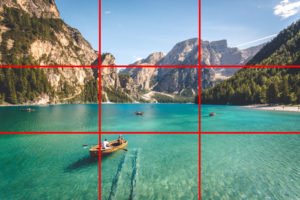
This is probably the first compositional rule that any photographer comes across, and that’s for a very good reason – it’s simple and it works. The basic premise is that you divide your camera’s frame up into thirds and plant key objects in these lines, and the composition will work better. This often works really well and if you’ve not learnt much about photography yet – it’s a great way of dramatically improving your photos and making them more interesting. The idea is that the viewer gets to see more than just the subject and is free to, and encouraged, to explore the photo themselves.

Here is the full tutorial on the Rule of Thirds. A Beginners Guide To Photography

Visual Weight

Visual weigh is different to size or weight as we know it, and it’s largely down to different elements, such as human eyes and writing. When you can understand visual weight a lot more, you’ll start to understand how people look at photos, and how you can position certain elements in a frame to direct the viewers attention. It’s no so much a tool, or a rule, as it is an understanding.
Here is the full tutorial on Visual Weight. A Beginners Guide To Photography

Balance

Balance in a photo has a big affect on how we feel when we look at the photo, as an unbalanced photo can make us feel uneasy, where as a balanced photo, will make us feel more relaxed. It really doesn’t matter whether you choose to make the photo balanced or unbalanced, but you should understand why you’ve chosen one or the other, and have reasons to justify this choice. Again, it’s one of those situations where the more you know, the easier it will be to produce the desired effect.

Here is the full tutorial on Balance. A Beginners Guide To Photography

This was my 100th tutorial today, so I hope you’ve gotten something out of it, I know I’ve gotten a lot out of writing them. If you have any questions, please come over to Facebook and I’ll be happy to help. Thanks, Josh.A Beginners Guide To Photography A Beginners Guide To Photography

How to Effectively use Juxtaposition in Your Photos

Introduction to Juxtaposition

Juxtaposition is easy to do when you know how, but isn’t a particularly common occurrence in everyday photography, so that increased the degree of difficulty. You can use it to varying degrees of effectiveness depending on how obvious you make it, and it’s a really good way of making what could have been a boring photo into something much more interesting.

What is Juxtaposition?

Juxtaposition happens when there is two or more elements in a scene that either contrast each other, or one element contributes towards another to create an overall theme. It’s all about making the viewer wonder why we chose a certain viewpoint for the photo, and why we decided it was good enough to share with others. To create a point of juxtaposition, the photo must have at least two elements in the photo that contains strong visual weight, so that the viewer looks at both at the same time and comes to their own conclusion about their purpose in the photo.

What makes juxtaposition such an interesting compositional tool is that it’s largely based on chance appearances of two elements, although it can be forced at times. If you have a look at the photo below, you’ll see a drunk man walking past a sign offering a discount for double measures of alcoholic drinks. If you’ve read my post on visual weight, you’ll know that the eyes of a face and writing have very strong visual weight, so we tend to notice both equally.

This use of juxtaposition takes a rather boring photo of a drunk man walking and makes it much more interesting. This photo happened by chance so it’s a little bit rarer, but it could have been easily forced, which we’ll get to later on.Juxtaposition 14525 How to Effectively use Juxtaposition in Your Photos

When you take two elements that reinforce the theme of the photo, it instantly become a much stronger photo. The photo below was shot in Croatia where it was very hot so the two men had their tops off, while putting wristbands together for a festival, but I noticed that they were sitting under a painting of a heart, so I took a photo. The juxtaposition was no accident, I framed the photo because of the painting, and I went unnoticed when I took the photo so that they didn’t look up and draw the visual weight elsewhere. The idea was that the viewer would look at the heart and then notice the two topless men and see the correlation between the two, which has proven that it works.Juxtaposition 14527 How to Effectively use Juxtaposition in Your Photos

Some photos with juxtaposition require context to work, so by looking at the photo below, you might not see any, but if you were to see the title of the album that it was in, then you would have. This photo was taken at Gay Pride, so instantly the rainbow in the photo takes on a whole new meaning. This sort of juxtaposition can work really well in the right circumstances, but you need to make sure that the viewer has the most basic, but relevant information to go along with it.Juxtaposition 14526 How to Effectively use Juxtaposition in Your Photos

When you start to include contrasting elements in a scene, then it can get a little bit more complicated, and this is often where you’ll see forced juxtaposition. The plane flying above the Lincoln Memorial building below evokes very obvious feelings in a post 9/11 world, and when you consider that the plane is very low to the ground, those feelings are heightened. Again, this was a chance occurrence, but I knew what I was doing when I took the photo and because of the obvious juxtaposition, people tend to spend a lot longer looking at it.Juxtaposition 14524 How to Effectively use Juxtaposition in Your Photos

Forcing Juxtaposition

This is surprisingly easy to do, but I tend to find it quite obvious and not very effective. It’s one thing to know that juxtaposition is taking place when you’re taking a photo, but it’s another to go looking for it. Anyone can sit outside a big bank and wait for a homeless person to walk past to take a photo, that’s just a matter of time, not skill. The more you know about composition, the more you understand a scene when you’re looking at it, and it will provide you with the knowledge to guide you into taking a good photo.

When you look at the photos used in this post, the most subtle uses of juxtaposition (such as a two men sitting under the heart), the stronger the photo is, and the more obvious (such as the drunk man), the less the effect has on the photo. And by this I’m talking about the amount of time we spend looking at a photo. Juxtaposition 14523 How to Effectively use Juxtaposition in Your PhotosHow to Effectively use Juxtaposition in Your Photos1 How to Effectively use Juxtaposition in Your Photos

How to Influence The Way People Look at Your Photos

Introduction

The way in which we view a photo is heavily dependant on the photographer’s choice of composition, which leads our eyes in a certain path. The more that you understand about how people look at photos, the better you’ll become at influencing them in the future.

Looking & Interest

At one time, this was a bit of a mysterious subject matter, but now we have the technology to study how people view photos and use that information to our advantage. It doesn’t tend to matter whether you’re a photographer who’s well used to looking at composition and photographic elements, or a viewer, looking at their very first photo – we all look at photos in the same way.

When we’re interested by a photo, we look towards that interest and work our way around, with different elements of visual weight fighting for our attention. There are three main ways in which we look at a photo which will change the way we scan a photo. The first of these is when we’re trying to look for something in a photo, for example, a person. Liken this to viewing tagged photo of friends on Facebook and trying to find them in the photo, while just glancing over the other people. Had you not known anyone in the photo, you would have seen it in a completely different way.2011 01 07 at 23 14 16 How to Influence The Way People Look at Your Photos

The second way is what happens when there’s a large visual weight that dominates the photo, because it provides a strong amount of interest at the first glance. This changes our expectations of the photo, and how we look at it. If you saw a photos of a good looking person, you might be immediately drawn to their face, and upon seeing that you like it, you would glance over the rest of their body, leaving the other elements of the photo to wait. These first two ways of looking contain obvious reasons for looking at a certain part of the photo, and would be considered quite hard to create photographic art from.IMG 9092 How to Influence The Way People Look at Your Photos

The final way that we tend to view photos has a lot to do with the various visual weights in a photo. When there’s no expectations in the photo, our eyes are left to browse for themselves, in what seems like a free movement. A good photographer though will understand the elements in the photo and use them to direct the attention of the viewer to a certain part. This has a lot to do with visual weight and the more you understand about that, the better you direct the viewer. If you’ve not done so already, I suggest that you go back and read the linked post.

In the photo below, I knew that having the sun on the left hand side of the frame would draw our attention first, before the brightness encouraged the eyes to look elsewhere. The light that’s landed on the rocks in the foreground acts as a welcome and interesting rest for our eyes, before working their way diagonally up the frame, ending up at the blanket, just as I had intended. Our eyes take this in as an interesting contrast to the rest of the frame, and we start to look closer at the rocks sounding them in comparison.3663975939 b81e6b5d3b o How to Influence The Way People Look at Your Photos

You can also introduce other composition techniques to make this more effective, like I’ve done in the photo below. The photo is of a model, but I used a triangle to help the viewer to explore the frame. You firstly glance over the breakwater before meeting the model’s eye-line. You see that her body language is leaning into the photo, with the right side of the frame feeling quite uncomfortable. The eye-line takes you back across the photo over to the end of the breakwater in the sea, down the breakwater to the model’s arm and then back up to her face.

IMG 3735 2011 06 03 at 19 22 45 How to Influence The Way People Look at Your Photos

Our eyes are known to scan from left to right, so when you remove a human subject from the frame, they will glance across the frame much more naturally. Have a look at the photo below and you’ll see that your eyes will glance over the triangular shape of the land on the left briefly, before very quickly looking at the hills in the background and then landing on the boat in the foreground. Your eyes will most likely have skipped the small boat because the boat in the foreground is much more dominant. Once that’s been taken in, the eyes are free to move around again, quite likely going back to the small boat.IMG 2366 2011 05 23 at 17 55 33 How to Influence The Way People Look at Your Photos

We’ve seen what our eyes do when there’s a human subject in the frame, and no human subject too, but what about when all there is a is a human subject? The first thing we look at are the eyes. They tell us the most about the subject; about how they’re feeling, where they’re looking, even what they’re thinking. Our eyes are just used to looking straight at a person’s eyes. Then we’ll look at the mouth as there’s often a lot of emotion in the body language of the mouth. After this, our eyes are free to explore the frame, so long as there’s nothing too interesting about the subject. If the subject clearly has a strong emotion, or looking away from the camera, then that would dictate where our eyes look next.Keira 14198 How to Influence The Way People Look at Your Photos

If you want to learn more about composition then I would strongly encourage it, as it will make a massive difference to your photography. To help you to fully understand this tutorial then check out my post on visual weight.How to Influence The Way People Look at Your Photos1 How to Influence The Way People Look at Your Photos

10 Ways to Critique Your Photos to Improve Your Photography

Introduction

I get asked to critique photos all the time now, and I’m happy to do it, but I often feel that people’s photography would dramatically improve if they could see for themselves where they’re going wrong. Small things that I would do differently can make a big difference to the end result. The sooner you learn to critique for yourself, the better, as it means that you’ll be able to study your photos as you’re taking them instead of getting home and wishing you could go back and retake them.

If you would like your photo critiqued, click here.

Where is the Visual Weight?

This is the first thing you’ll notice when you look at the photo. Ask yourself, where do your eyes immediately go? Where do you want the eyes to go? If you read my post on visual weight, you’ll have a good understanding of how to use if effectively, but if not, there’s a few elements that you should consider.

I really enjoy taking photos of models as its a relaxing, fun and a great way to play around with some new tricks you’ve picked up, but the important question to ask yourself is whether the photo would still be good without the beauty of the model being a large part of the visual weight? If the answer is no, then you need to consider what is good about the photo? The lighting? Your technique? Or are you just relying on your model to make it a good photo?

If you’re trying to direct the viewers attention to a certain part of the photo, but the first thing you look at is something else, such as writing, or a person’s eyes, then you need to recompose your shot. The sooner you learn to think like this, the better, as you’ll start to be able to fix your photos as you’re taking them and you won’t be left wishing you could go back and reshoot.IMG 3741 2011 06 03 at 19 23 24 10 Ways to Critique Your Photos to Improve Your Photography

Are There Any Distracting Elements?

Whatever isn’t adding to the photo, is taking away from the photo. That’s my rule and it’s something that I carefully consider whenever I take a photo as it’s a very important part to the composition. If there’s a branch leaning into the photo, or a dark shadow covering part of your scene, then they’ll likely be taking away from the overall effect of your photo.

Another popular problem I see when you have lines that lead out of the photo, but don’t lead to anything. This is good when you’re trying to convey a feeling of dynamic tension, but the most popular instance of this is when an limb doesn’t quite fit into the photo, when it really should do. Unless there’s a good reason for a body part to into a photo unfinished, I like to include it. Check out the photo below to see what I mean.Keira 14238 10 Ways to Critique Your Photos to Improve Your Photography

Is the Exposure/Metering Correct?

Sometimes when you’re shooting on the wrong metering mode, you can end up with poor results as the camera doesn’t know how to correct the exposure. Most of the time this happens, your camera is left on evaluative when it should really be on spot mode so that it can meter for the right part of the photo (often the subject), and not the whole thing. If your metering is fine, but it’s still coming out too light or dark, then you know what you have to do. “I’ll fix it in post” are the words of a bad photographer. Get it right in the camera. 10 Ways to Critique Your Photos to Improve Your Photography

Would it Look Better Through a Different Focal Length?

There’s a lot more to focal length than meets the eye, it’s not just about how close the subject appears. If you don’t understand exactly what it is, then I suggest that you click on the link in the previous sentence, as there’s a lot to know. The main difference that the focal length can do is change the perspective of the photo – the longer lengths appear to push everything in the scene much closer together.

Have a look at the example below to see what I mean. You’ll often see portraits are shot at longer lengths because this compressing effect is flattering and isolates the subject from the camera, making the shot feel more natural. When you understand the effect that different lengths have, you can best decide what would look best for your photo. 10 Ways to Critique Your Photos to Improve Your Photography

What is the Background Doing?

Every pixel counts. Whether it’s your background, your foreground, or your subject, a pixel is a pixel and you should do whatever you can to make sure that each of them counts. Have a look at this link to see what you can do to make your backgrounds more interesting. This relates heavily to visual weight and distracting elements, as it’s important to consider what makes your photo great? This is why I don’t like shooting on a white background as you limit what you can do with the photo to make it more interesting. 10 Ways to Critique Your Photos to Improve Your Photography

How is the Composition & Balance?

There are plenty of composition techniques that you can follow to improve your photos, just make sure that you don’t follow them blindly. The rule of thirds is a great way to take photos, but don’t do it for the sake of it, it needs to work for your photo. There’s plenty of times that a centered photo will work the best, or even slightly off center – it all depends on the feeling that you would like to produce. For most instances a balanced photo is going to work best, so study the visual weights and make sure that you have them placed around the photo so that they weigh each other out. If you want your photo to be unbalanced then you know what you have to do. 10 Ways to Critique Your Photos to Improve Your Photography

Does the Photo Require Post Production?

More often then not when I take photo, the answer is no, but that’s only true to a certain extent. The photo is usually good enough to stand up on its own without post production, but that doesn’t mean that it won’t improve the photo if I do it. My photo below went up on the Facebook page with no post production, but that’s because I wanted to demonstrate that it doesn’t really need it, I will still end up putting a few finishing touches onto it though.

If your photo needs post production purely because your technique is poor then it’s best to fix it in the camera. Some people seem to think that the computer can fix most problems, but there’s actually a very real limit to what you can do. The photo below was a 30 second exposure and the only light source was a £3 torch – if you would like to see more photos like this, then come check out our Facebook.Keira 13865 10 Ways to Critique Your Photos to Improve Your Photography

Is the Color Accurate?

When people take photos indoors without the flash on, the white balance almost always comes out wrong as the camera struggles to recognise the tungsten light. This makes the photo appear orange and unnatural, and if you’re not shooting in RAW, then you’ll want to fix it in the camera or you’ll be a bit stuck with options for fixing it later on. On top of this, you should consider whether the photo would suit being in black and white or whether you’ve turned it black and white for the sake of making it look arty?

When I’m shooting in black and white, I’m actually shooting in colour with the intention to turn it black and white later, but the difference is it changes the way I’m shooting. Black and white relies heavily on shape, form and texture to work as these are brought out in the desaturation of colour. Ask yourself if your B+W photo has this or whether you’re doing it to try and make it look good. This is another example of misguided visual weight. 10 Ways to Critique Your Photos to Improve Your Photography

Does the Depth of Field Suit the Photo?

I recommend the 50mm f/1.8 to people because of the wide aperture and overall quality, but the problem that often occurs afterwards is that you start to see a lot of photos with the aperture wide open. Shallow DoF for shallow DoF’s sake doesn’t do you any favours and while you may look at it now and think it looks good, you’ll look back in a year’s time and cringe.

If you know what you’re doing with it, it can work really well like in the photo below. This was set to f/1.4 (the widest aperture I have), but I focused on the model’s eyes so the whole photo appeared to be in much better focus. If you’re stuck with a wide aperture in a low light condition, but the DoF doesn’t suit your photo, then raise your ISO or use an off camera flash. 10 Ways to Critique Your Photos to Improve Your Photography

Is The Photo Cliche?

We all see a lot of cliche photography out there, and we’ve probably all been guilty of it at some point in our lives, but it’s best to try and avoid it. I find that the majority of cliche photos come about from a lack of photographic inspiration, which leads us to taking photos of our pets, flowers or sunsets, or putting a garish border on our photos.

If you have to implement ’cool’ photo effects from your computer, then chances are that you’re not trying hard enough with your photography. Often when I’m meeting with a model, I wonder where I’m going to shoot, but if you put your mind to it, it’s not that hard to come up with somewhere more interesting than your garden. The sooner you challenge your photography, the better it will become. 10 Ways to Critique Your Photos to Improve Your Photography

I hope you’ve learned a thing or two, and as always, come on over to our Facebook page for discussions, photos and advice.10 Ways to Critique Your Photos to Improve Your Photography 10 Ways to Critique Your Photos to Improve Your Photography

Why Nikon Is Wrong: “A photographer is only as good as the equipment he uses”

What Happened?

Nikon made a bit of a mistake yesterday when they posted this on their fan page:

“A photographer is only as good as the equipment he uses, and a good lens is essential to taking good pictures! Do any of our facebook fans use any of the NIKKOR lenses? Which is your favorite and what types of situations do you use it for?”

We all know that what they said was wrong, but the important question is what makes it so wrong and why has it gotten us so riled up? Firstly It would be fair to say that they got it completely backwards, so much so that part of it could almost be a typo – the equipment is really only as good as the photographer using it, not the other way around.

The idea that it all comes down to the gear that you’re using is ridiculous, even for a camera and lens manufacturer to suggest it. I think the reason it ruffled so many feathers is because a lot of good photographers have had something like this said to them: “Wow, your photos are really good, you must have a great camera”, or overhead a statement like this: “look at the size of his lens, mine is bigger than that, his doesn’t even zoom”, and statements like that don’t really go down so well, so for Nikon to suggest it too, is pretty poor.

A good photograph is not the product of buying the best gear that money can buy, it’s about how you use that gear to your advantage. A good photo stands up by itself without the need for special effects or editing. More often then not, when I’ve found that I’ve produced a good photo, it’s a result of good composition, used subtly so that the viewer can tell it’s good without having having to have it explained to them, like in this photo below. Why Nikon Is Wrong: A photographer is only as good as the equipment he uses

But Aren’t They Kind Of Right?

Well, no, but in a very twisted way… yes. Let me explain. There are certain things that budget equipment can’t do, such as take really good low light photos, so in that way, they have a very small point. Don’t get me wrong, I buy the best quality gear that I can afford, but that’s because from personal experience, I always end up regret buying inferior products. I will buy the top of the range Canon lenses and I absolutely love using them and I get some excellent result while using them, but it’s not the lens that’s doing the work for me; it’s me. When it comes down to it, it’s the photo that’s being seen, not the camera that was used to take it.

It would also be unprofessional to turn up to a photography job without the correct gear, which helps to produce a good photo, such as an external flash and a low light lens if you’re shooting indoors, but taking photos on a job doesn’t make you a good photographer either. Even taking good photos doesn’t necessarily make you a good photographer; everyone gets lucky once and a while, it’s all about consistently good results.

So Then, What Makes A Good Photographer?

This is a very subjective question as it’s mostly a matter of opinion more than anything, so someone I may think is awesome, you may think to be rubbish. You should only ever shoot for yourself, as trying to please everyone will prove itself to be completely pointless as it’s unlikely you’ll ever succeed. There’s popular opinion on who is a good photographer, but there’s no rule which you can follow to take you there – mostly it’s down to practice.

“Your first 10,000 photos are your worst” – Henri Cartier Bresson

The quote above will ring true to anyone who actually uses their camera enough to take over 10,000 photos, as the improvement in this time is huge. There’s only so long you can go into photography ignorant to the elements, before you have to learn how to take better photos, and it’s likely that if you’ve reached that many photos, you’ll have learnt something by now. Practice really is the key to good photography, and when you compliment that with study of composition and photography, you’ll start to see your photography improving a big way.

As cameras get better and better, the quality of the images improve, and that’s something we’re all appreciative of because they begin to allow us to do stuff we couldn’t do before by providing features such as an improved dynamic range, but that’s still not what good photography is. The camera is not your tool, it’s your eyes and your mind that make the photos. If you want to become better at photography, I strongly suggest that you carry your camera around with you much more often, and before long, you’ll be thinking like a photographer.

So What Now With Nikon?

Nikon is a fantastic company and they make some really great gear. They should not be thought any less of for the twisted thought process of someone in their PR department, as I assure you, there will be plenty of outrage within the company’s staff about what was said. When it comes down to it, it was just a sentence that was very foolishly said by one of the largest camera suppliers in the world. It doesn’t make them look good, but something very good has come out of this; photographers all over the world are throwing in their 2 cents on this matter and a discussion has developed about photography, and not just the gear which we use.chat Why Nikon Is Wrong: A photographer is only as good as the equipment he uses

I hope you’ve taken something away from this today. I originally posted this link on my Facebook fan page so if you’re interested in seeing more links and discussions like this then come and like us. Thanks – Josh